
Israeli Airstrikes on Lebanon Threaten US-Iran Ceasefire According to EU Diplomat
Here's what it means for you.
As tensions escalate in the Middle East, global markets and regional security dynamics may directly impact your professional landscape.
Why it matters
The ongoing conflict risks destabilizing oil prices and security in the Gulf region, affecting global supply chains and economic forecasts.
What happened (in 30 seconds)
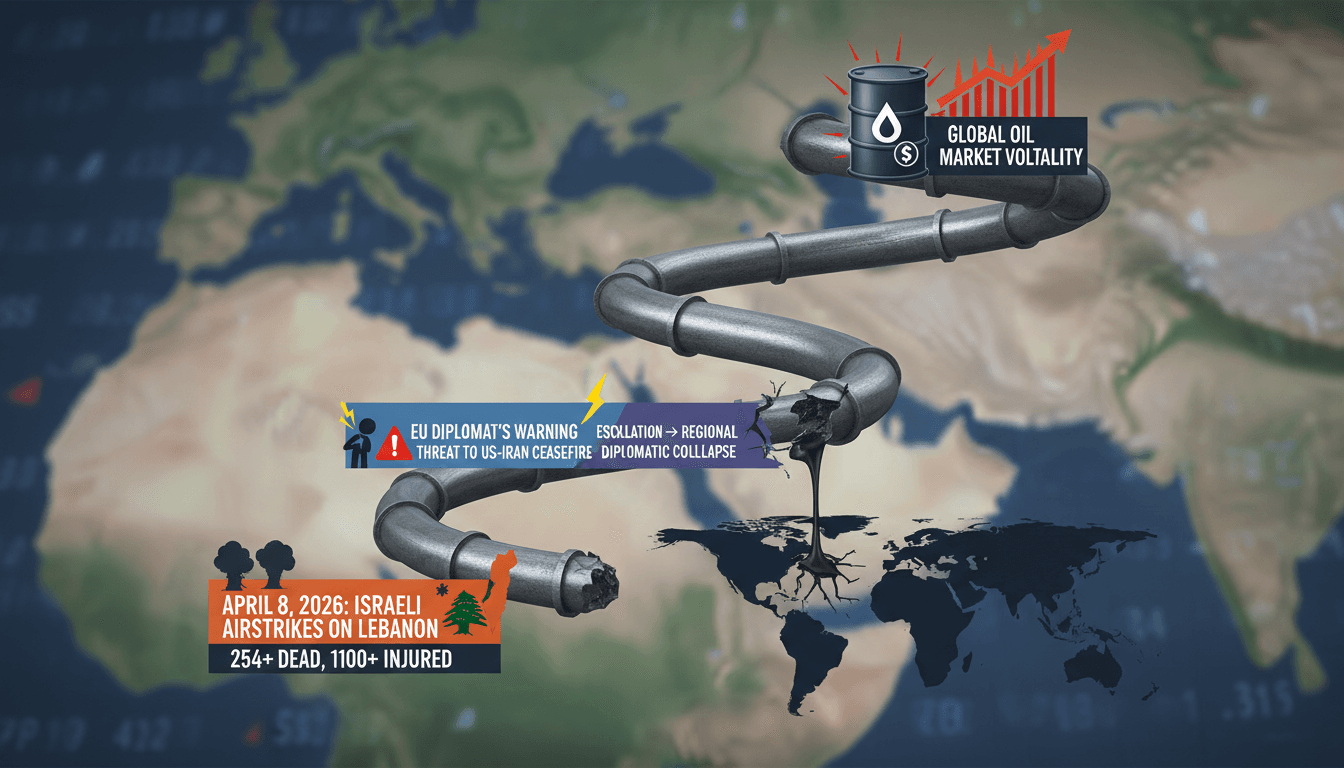
- Israeli airstrikes on Lebanon on April 8, 2026, resulted in at least 254 fatalities and over 1,100 injuries.
- EU High Representative Kaja Kallas warned that these strikes threaten the fragile US-Iran ceasefire established just hours earlier.
- Israeli Prime Minister Benjamin Netanyahu stated that operations against Hezbollah in Lebanon are excluded from the truce, escalating regional tensions.
The context you actually need
- The 2026 Iran war intensified following the assassination of Iran's Supreme Leader, leading to retaliatory actions from Hezbollah against Israel.
- A conditional ceasefire was brokered by the US and Pakistan, aiming to halt direct hostilities and stabilize the Strait of Hormuz, a critical global shipping route.
- Israel's military strategy views operations in Lebanon as separate from the ceasefire, complicating diplomatic efforts and increasing the risk of broader conflict.
What's really happening
The recent Israeli airstrikes on Lebanon are a significant escalation in the ongoing conflict that has seen a marked increase in hostilities since the assassination of Iran's Supreme Leader, Ali Khamenei, in February 2026. This event catalyzed a series of retaliatory attacks from Hezbollah, which has been actively engaged in military operations against Israel. The airstrikes on April 8 targeted over 100 sites across Lebanon, including densely populated areas in Beirut and the Bekaa Valley, resulting in a staggering death toll of 254 individuals and injuries to more than 1,100.
The timing of these strikes is critical; they occurred just hours after the announcement of a conditional US-Iran ceasefire, mediated by Pakistan, which aimed to halt direct hostilities and reopen the vital Strait of Hormuz. This strategic waterway is crucial for global oil shipments, and any disruption can have immediate and far-reaching effects on oil prices and global markets.
Kaja Kallas's warning that the airstrikes impose "immense pressure" on the ceasefire highlights the precarious nature of the current geopolitical landscape. The EU's call for Israel to cease operations underscores the urgency of the situation, as continued military actions could lead to a broader regional conflict, drawing in various state and non-state actors.
Netanyahu's assertion that the ceasefire does not apply to Lebanon reflects Israel's long-standing policy of addressing threats from Hezbollah independently of broader diplomatic agreements. This stance complicates the efforts of international mediators who are attempting to stabilize the region and prevent further escalation. The Lebanese government has convened in response to the crisis, and the UN Secretary-General has condemned the strikes as "appalling," indicating widespread international concern over the potential for increased violence.
As the situation develops, the volatility in the region is likely to affect oil prices, which have already seen fluctuations due to the re-closure of the Strait of Hormuz by Iran. This could lead to a spike in oil prices, impacting economies worldwide, particularly those heavily reliant on oil imports.
Who feels it first (and how)
- Oil and gas companies: Increased prices and supply chain disruptions could impact profitability and operational costs.
- Airlines and travel sectors: Flight disruptions to Lebanon and surrounding areas may lead to cancellations and financial losses.
- Investors in global markets: Heightened geopolitical tensions may lead to increased volatility in stock markets and commodities, affecting investment strategies.
- Residents in the Gulf region: Heightened security measures and potential military escalations could affect daily life and economic stability.
What to watch next
- Oil price fluctuations: Watch for changes in oil prices, particularly if they exceed $110 per barrel, as this could signal broader economic impacts.
- Diplomatic responses: Monitor statements from the EU and US regarding ceasefire negotiations and any potential sanctions or military responses.
- Hezbollah's military actions: Keep an eye on Hezbollah's response to Israeli operations, as renewed attacks could escalate the conflict further.
Israeli airstrikes have resulted in significant casualties and injuries in Lebanon.
Continued military operations by Israel against Hezbollah, despite international calls for de-escalation.
The long-term implications for the US-Iran ceasefire and how it will affect regional stability.
Insights by A47 Intelligence
Arabic-language UAE newspaper coverage focused on domestic affairs, public institutions, business, society, and regional developments.
"Al Khaleej coverage generally reflects a mainstream UAE editorial lens with strong attention to public affairs, institutions, and regional developments."
— A47 Editor
بروكسل: الضربات الإسرائيلية على لبنان تهدد وقف إطلاق النار في إيران
The European Union has called on Israel to cease its airstrikes on Lebanon, stating that these actions threaten the ceasefire between the United States and Iran. This escalation in hostilities raises concerns about regional stability and the potentia...
Regional and international reporting focused on Middle Eastern politics, diplomacy, and economics.
"Asharq Al-Awsat is a Saudi-owned international newspaper reflecting mainstream Gulf political perspectives."
— A47 Editor
EU Says Strikes on Lebanon Endangering US-Iran Ceasefire
The European Union has expressed concern over recent Israeli airstrikes in Lebanon, which are seen as jeopardizing a newly established ceasefire between the United States and Iran. These strikes, occurring shortly after the ceasefire agreement, have ...