
Oil Prices Stabilize at $95 Amid U.S.-Iran Peace Negotiations
Here's what it means for you.
If you rely on oil for your business or commute, the current stabilization in prices could impact your operational costs and budgeting strategies.
Why it matters
The ongoing U.S.-Iran negotiations directly influence global oil supply and pricing, affecting economies and industries worldwide.
What happened (in 30 seconds)
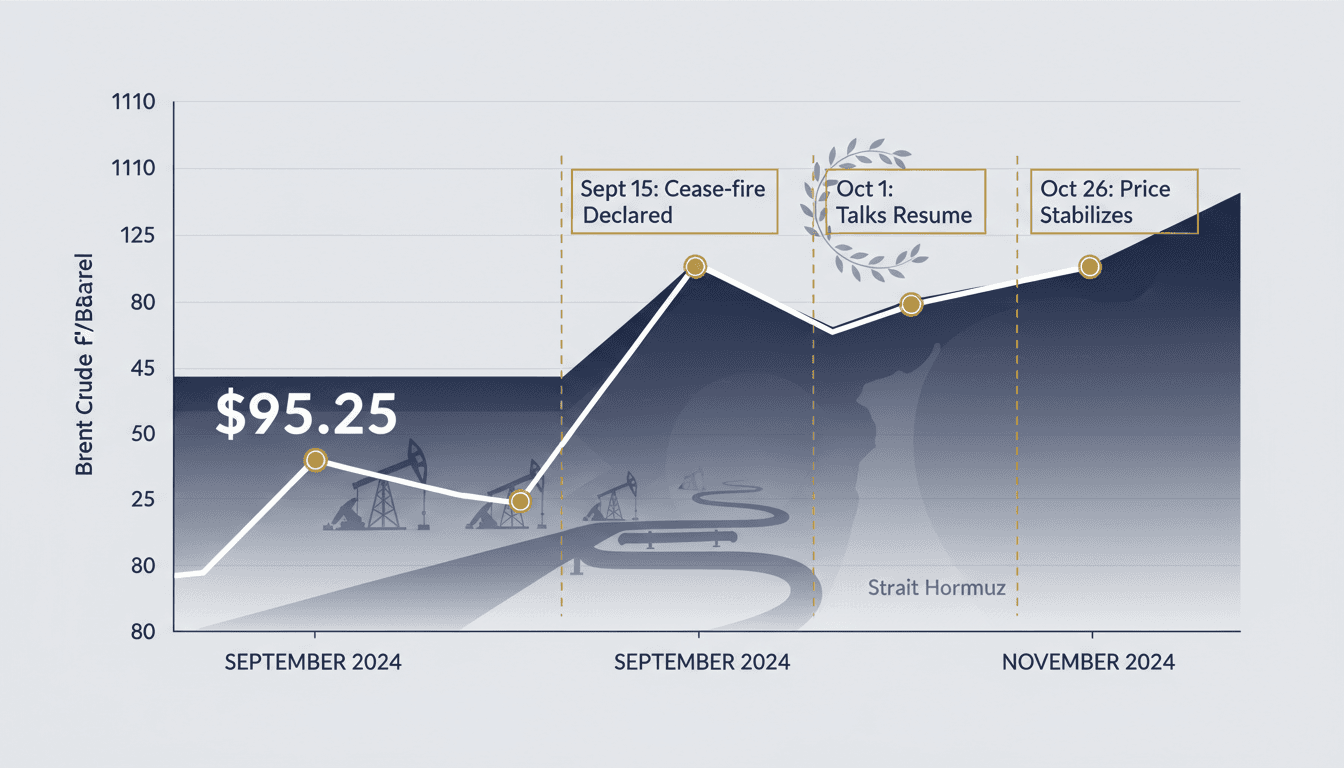
- Oil prices declined: On April 21, 2026, Brent crude futures fell 0.3% to $95.25 per barrel amid expectations of renewed U.S.-Iran peace talks.
- Cease-fire impacts: A two-week cease-fire initiated earlier in April allowed for alternative oil routing, easing supply concerns that had driven prices above $140 per barrel.
- Geopolitical tensions persist: Despite the cease-fire, conflicting reports about the Strait of Hormuz's status have led to market volatility and uncertainty.
The context you actually need
- Strait of Hormuz significance: This narrow waterway is crucial for global oil transport, accounting for 20% of the world's oil supply. Disruptions here can lead to significant price spikes.
- Recent price fluctuations: Prices surged in late March due to heightened tensions, but the conditional cease-fire has led to a temporary easing of prices.
- Market reactions: Analysts are cautiously optimistic, with supply deficits narrowing, but geopolitical risks remain high, particularly if talks fail.
What's really happening
The recent stabilization of oil prices around $95 per barrel is a complex interplay of geopolitical negotiations and market dynamics. Following a period of intense conflict in late March 2026, when tensions between the U.S. and Iran escalated, oil prices soared above $140 per barrel due to fears of supply disruptions in the Strait of Hormuz. This chokepoint is vital for global oil transport, and any threat to its security can lead to immediate price spikes.
In early April, a conditional two-week cease-fire was agreed upon, which allowed for some normalization of oil flows and alternative routing strategies. This led to a significant drop in prices as traders adjusted their expectations. However, the market remains sensitive to geopolitical signals. The mixed outcomes from the first round of U.S.-Iran talks have kept traders on edge, leading to fluctuations in oil prices as new information emerges.
As of April 21, the market is reacting to the prospect of a second round of talks, which has contributed to the slight decline in prices. However, President Trump's warning against a non-deal and the potential for renewed military action against Iranian infrastructure loom large over the market. Analysts from firms like Julius Baer and ING have noted that the supply deficit is narrowing to approximately 5%, indicating a more balanced market, but the risk of renewed conflict could quickly reverse this trend.
The broader implications of these developments extend beyond just oil prices. For countries heavily reliant on oil imports, such as those in Europe and Asia, sustained high prices can lead to inflationary pressures and economic instability. Conversely, oil-exporting nations may benefit from higher revenues, but they too face risks if geopolitical tensions escalate further.
Who feels it first (and how)
- Oil traders: They experience immediate impacts from price fluctuations and geopolitical news, affecting their trading strategies.
- Transportation sectors: Airlines and shipping companies face increased fuel costs, which can lead to higher ticket prices and shipping fees.
- Consumers: Individuals relying on gasoline for transportation may see fluctuations in fuel prices at the pump, impacting their daily expenses.
- Investors: Those with stakes in energy markets or related sectors will feel the effects of price volatility on their portfolios.
- Governments: Countries dependent on oil imports may face economic challenges, while exporters could see revenue changes based on price stability.
What to watch next
- U.S.-Iran negotiation outcomes: The success or failure of ongoing talks will significantly influence oil prices and market stability.
- Strait of Hormuz security developments: Any incidents or threats in this region could lead to immediate price spikes and market reactions.
- Global economic indicators: Watch for inflation rates and economic growth data in oil-importing countries, as these will reflect the broader impact of oil price changes.
Oil prices are currently stabilizing around $95 per barrel due to ongoing negotiations.
Continued volatility in oil prices as geopolitical tensions fluctuate and negotiations progress.
The long-term effects of these negotiations on global oil supply and pricing remain uncertain.
Insights by A47 Intelligence
Markets desk coverage, trading insights, and investor updates.
"WSJ’s markets reporting provides in-depth analysis and context for investors."
— A47 Editor
Oil Market Stabilizing Despite Volatility in Middle East
Oil prices have experienced fluctuations as expectations rise for upcoming talks between the U.S. and Iran, with Julius Baer indicating that oil markets are stabilizing despite ongoing volatility in the Middle East.
Regional and international reporting focused on Middle Eastern politics, diplomacy, and economics.
"Asharq Al-Awsat is a Saudi-owned international newspaper reflecting mainstream Gulf political perspectives."
— A47 Editor
Oil Falls on Expectations US-Iran Talks Likely to Proceed, Opening Supply
Oil prices have declined as expectations rise that US-Iran negotiations will proceed, potentially increasing supply. The talks aim to address ongoing tensions and the fragile ceasefire in the region, which has been impacted by recent geopolitical dev...