
FBI Investigates Links Among Cases of Missing and Deceased U.S. Scientists
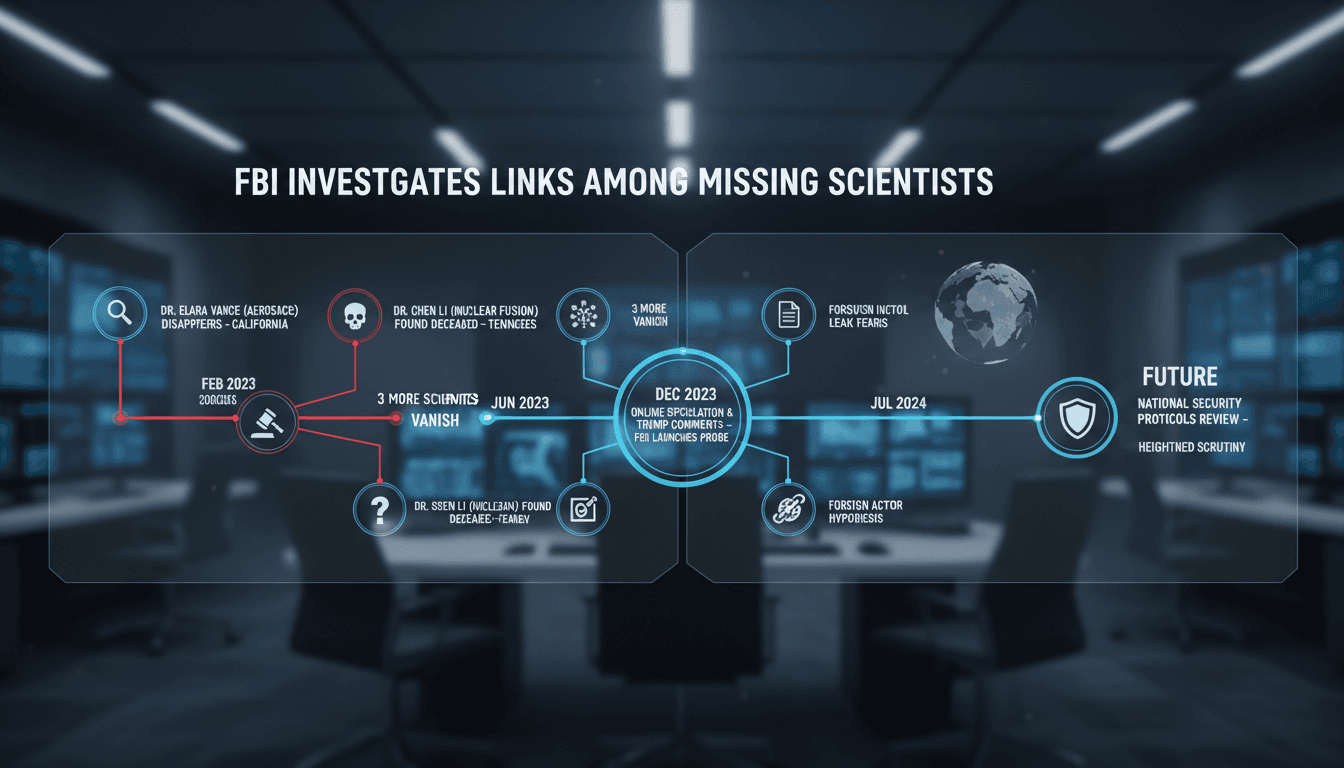
Here's what it means for you.
If you work in research or technology sectors, the implications of this investigation could affect funding, collaboration, and security protocols.
Why it matters
The investigation raises significant concerns about national security and the safety of professionals in sensitive scientific fields.
What happened (in 30 seconds)
- On April 21, 2026, the FBI announced an investigation into at least ten cases of missing or deceased scientists linked to U.S. nuclear and aerospace programs.
- The inquiry, prompted by online speculation and comments from President Trump, seeks to determine potential connections to classified information or foreign actors.
- No confirmed links have been established as of now, but the investigation is ongoing and involves multiple federal agencies.
The context you actually need
- A series of incidents involving scientists affiliated with major research institutions occurred between 2022 and 2026, including unexplained disappearances and deaths.
- Online theories have proliferated, suggesting espionage or targeted killings, fueled by the nature of the scientists' work and the sensitive information they may possess.
- Federal officials are under pressure to provide transparency and clarity, especially after President Trump's remarks on the seriousness of the situation.
What's really happening
The FBI's investigation into the cases of missing and deceased scientists is a response to a troubling pattern that has emerged over the past four years. The incidents began with the death of Amy Eskridge in 2022 and continued with a series of disappearances and deaths involving individuals connected to prominent research institutions such as NASA's Jet Propulsion Laboratory and Los Alamos National Laboratory. The nature of these cases—ranging from shootings to unexplained vanishings—has led to rampant speculation about potential espionage or even cover-ups related to national security.
The investigation was catalyzed by a combination of online discourse and public comments from President Trump, who characterized the situation as "pretty serious stuff." This has prompted federal agencies, including the White House and the Department of Energy, to coordinate efforts to analyze potential links among the cases. FBI Director Kash Patel confirmed the bureau's lead role in this investigation, emphasizing the need for a thorough review of the incidents.
Despite the heightened scrutiny, no confirmed connections have been established between the cases or any foreign actors. The House Oversight Committee has also launched a parallel investigation, indicating that lawmakers view these incidents as a potential national security threat. However, some former FBI agents have suggested that the cases may be unrelated, attributing them to personal issues such as mental health crises rather than a coordinated effort against scientists.
The lack of confirmed links has not dampened the urgency of the investigation. Federal officials are under pressure to ensure the safety of scientists working in sensitive fields, as their expertise is crucial for national security and technological advancement. The ongoing investigation may lead to changes in how research institutions handle security protocols and the safety of their personnel.
As the investigation unfolds, it highlights the intersection of science, national security, and public perception. The implications extend beyond the immediate cases, potentially affecting funding, collaboration, and the overall climate for researchers in sensitive fields.
Who feels it first (and how)
- Scientists and researchers: Increased scrutiny and potential changes in security protocols may impact their work environment.
- Government agencies: Heightened pressure to ensure national security and transparency in scientific research.
- Private sector firms: Companies collaborating with government agencies may face increased regulatory oversight and security measures.
What to watch next
- FBI updates: Continued announcements from the FBI regarding the investigation's findings will be crucial for understanding the situation's evolution.
- Legislative actions: Any new laws or regulations proposed by the House Oversight Committee in response to the investigation could reshape the landscape for scientific research.
- Public discourse: Monitoring how public perception shifts regarding the safety of scientists and the transparency of government operations will be important.
The FBI is investigating at least ten cases of missing or deceased scientists.
The investigation will lead to increased scrutiny of security protocols in research institutions.
Whether any confirmed links to foreign actors or classified information will emerge from the investigation.
Insights by A47 Intelligence
Focused political reporting and governmental affairs.
"NBC News is a mainstream media outlet known for comprehensive national and international news coverage with a centrist to slightly left-leaning editorial tone."
— A47 Editor
FBI says it is looking into whether cases of missing and dead scientists are linked
The FBI has initiated an investigation into the deaths and disappearances of at least ten scientists, following growing public speculation about potential connections among these cases. This inquiry has gained traction after President Trump highlight...
Conservative-leaning political and national coverage.
"The Washington Times is a conservative-leaning newspaper known for its political coverage and advocacy of right-of-center viewpoints."
— A47 Editor
'Serious stuff': Trump seeks answers to missing, dead scientists
The Trump administration has initiated an investigation into the mysterious disappearances and deaths of nearly a dozen scientists linked to America's nuclear and space programs over the past three years. This alarming trend has raised significant co...