
Crude oil prices surge as fears mount over US-brokered Iran ceasefire collapse
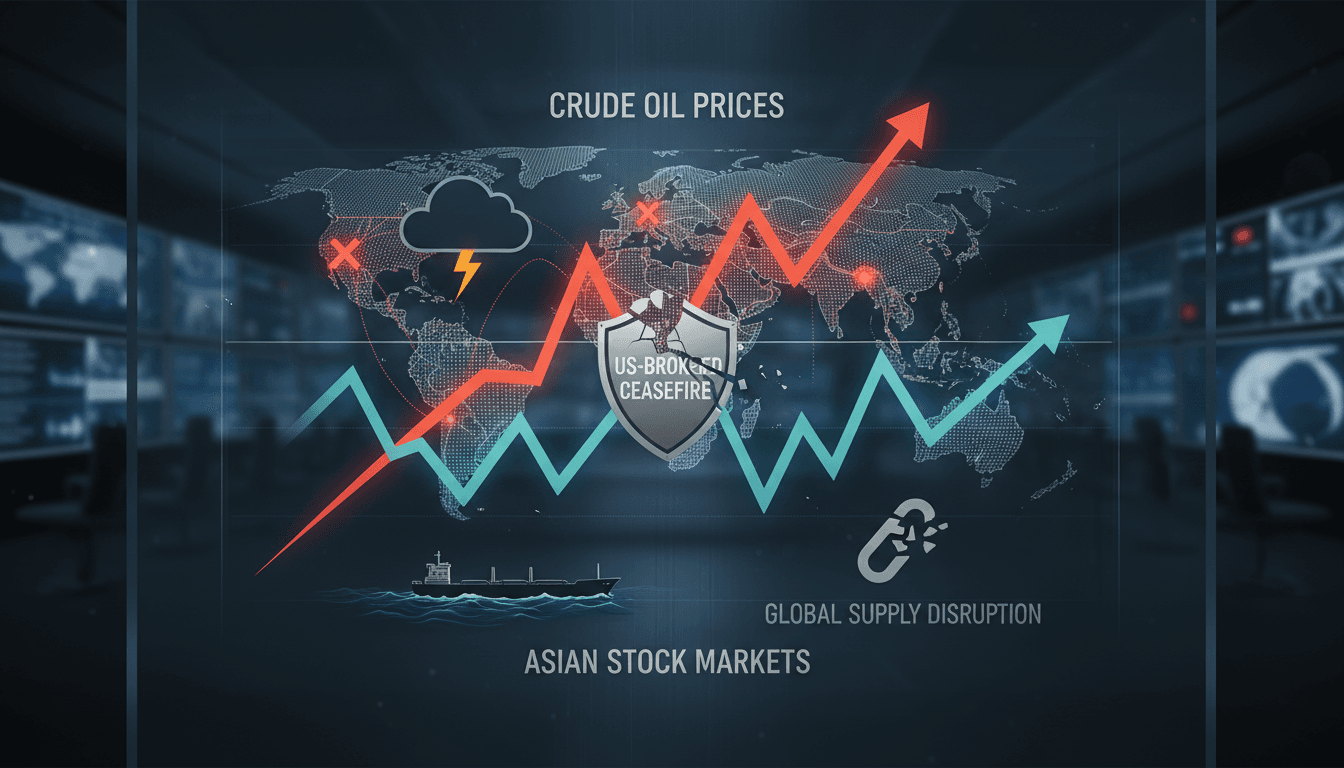
Here's what it means for you.
Rising crude oil prices can lead to increased costs for consumers and businesses worldwide, impacting everything from transportation to energy bills.
Why it matters
The volatility in oil prices directly affects global economic stability and can influence inflation rates across various markets.
What happened (in 30 seconds)
- Crude oil prices surged by 3% to $97.22 per barrel amid fears over the fragility of a US-brokered ceasefire with Iran.
- Asian stock indices fell with Japan's Nikkei 225 declining by 0.6%, reflecting investor anxiety over geopolitical tensions.
- The Strait of Hormuz was re-closed due to renewed hostilities, stranding approximately 800 vessels and exacerbating supply chain concerns.
The context you actually need
- Hostilities began in late February 2026, when US and Israeli strikes against Iran led to the closure of the Strait of Hormuz, a critical chokepoint for global oil shipments.
- A ceasefire was announced on April 7, 2026, which initially eased market fears, causing a significant drop in oil prices and a surge in global equities.
- Renewed conflict on April 8, including Israeli strikes on Lebanon and Iranian claims of ceasefire violations, quickly reversed market optimism.
What's really happening
The recent spike in crude oil prices and the decline in Asian stock markets are rooted in complex geopolitical dynamics and economic interdependencies. The initial announcement of a ceasefire by President Trump on April 7, 2026, provided a momentary reprieve for global markets, with oil prices plummeting over 16% and stock indices rallying. However, this optimism was short-lived.
On April 8, Israel launched significant strikes on Lebanon, which Iran deemed a violation of the ceasefire. This led to the re-closure of the Strait of Hormuz, a vital artery for oil transport, where approximately 800 vessels have been stranded since the onset of hostilities. The Strait is responsible for transporting about 20% of the world's oil and gas, making its accessibility crucial for global supply chains.
As tensions escalated, West Texas Intermediate (WTI) crude oil rebounded by 3%, signaling market apprehension about future supply disruptions. The immediate impact was felt across Asian stock markets, with indices like the Nikkei 225 and Hang Seng experiencing declines of 0.6% and 0.5%, respectively. Investors are now weighing the risks of ongoing conflict against the backdrop of a fragile ceasefire, leading to cautious trading behavior.
The situation is further complicated by the discrepancies between Iran's proposed 10-point plan for peace and the US's 15-point proposal, which has raised doubts about the viability of the ceasefire. Iranian officials have expressed skepticism about the talks, citing continued violations and the ongoing threat of military action. This uncertainty is reflected in market volatility, with analysts predicting that unless a clear resolution is reached, oil prices may continue to fluctuate significantly.
The UAE has emphasized that any ceasefire must guarantee the end of Iranian attacks and ensure free passage through the Strait of Hormuz, indicating a lack of trust in Tehran's commitments. The geopolitical landscape remains precarious, with the potential for further military escalations impacting not just regional stability but also global economic conditions.
Who feels it first (and how)
- Consumers: Higher oil prices lead to increased costs for gasoline and energy, impacting household budgets.
- Businesses: Companies reliant on shipping and logistics face elevated transportation costs, which may be passed on to consumers.
- Investors: Market volatility affects stock portfolios, particularly in sectors sensitive to oil prices, such as transportation and manufacturing.
- Countries dependent on oil imports: Nations reliant on stable oil prices for economic growth may experience inflationary pressures and currency fluctuations.
What to watch next
- US-Iran diplomatic talks: The outcome of upcoming negotiations could either stabilize or further destabilize oil prices and regional security.
- Shipping routes and logistics: Monitoring the reopening of the Strait of Hormuz will be crucial for understanding supply chain dynamics and oil market stability.
- Market reactions: Watch for shifts in Asian stock indices and oil prices in response to geopolitical developments, as these will indicate investor sentiment and economic expectations.
Crude oil prices are sensitive to geopolitical tensions, particularly in the Middle East.
Continued volatility in oil prices and stock markets as the situation develops.
The long-term viability of the ceasefire and its impact on regional stability and global markets.
Insights by A47 Intelligence
Corporate news, economic trends, and markets with UK and global scope.
"BBC News is widely regarded as reputable and impartial, with a public service mandate."
— A47 Editor
Oil prices rise as concerns grow over 'fragile' US-Iran ceasefire
Oil prices have risen as concerns mount over the fragile ceasefire between the United States and Iran, which was established to halt military actions and facilitate negotiations regarding the reopening of the strategically vital Strait of Hormuz. Thi...
Regional coverage and analysis focused on politics, diplomacy, and business across the Middle East.
"Al-Monitor is known for analytical reporting on Middle East politics and policy developments."
— A47 Editor
Crude rises, stocks fall on fears over nascent Iran ceasefire
Oil prices have risen while global stock markets have declined due to concerns surrounding a fragile ceasefire between the United States and Iran, which is threatened by renewed hostilities following Israeli airstrikes on Lebanon. The ceasefire, anno...
Markets desk coverage, trading insights, and investor updates.
"WSJ’s markets reporting provides in-depth analysis and context for investors."
— A47 Editor
Oil Rebounds, Asian Equities Fall Amid Fragile U.S.-Iran Cease-Fire
Oil prices rebounded while Asian equities experienced a decline amid a fragile cease-fire between the U.S. and Iran, which has led to ongoing uncertainties regarding marine traffic through the strategically vital Strait of Hormuz.
Oil, metals, and agriculture: supply/demand headlines, OPEC chatter, inventories, and price action.
"Solid tape for energy and metals traders tracking macro and micro catalysts."
— A47 Editor
Oil rebounds as Lebanon strikes test ceasefire, Hormuz disruptions persist
Oil prices have rebounded as Lebanon engages in a ceasefire agreement, while disruptions in the Strait of Hormuz continue to affect global oil supply. The recent ceasefire aims to stabilize tensions in the region, which have been exacerbated by milit...