
Over 70 Migrants Feared Dead After Boat Capsizes Off Libyan Coast
Here's what it means for you.
This incident underscores the ongoing humanitarian challenges in migration, which could influence global migration policies and economic conditions.
Why it matters
The tragedy reflects the persistent dangers of irregular migration routes and the urgent need for policy reform.
What happened (in 30 seconds)
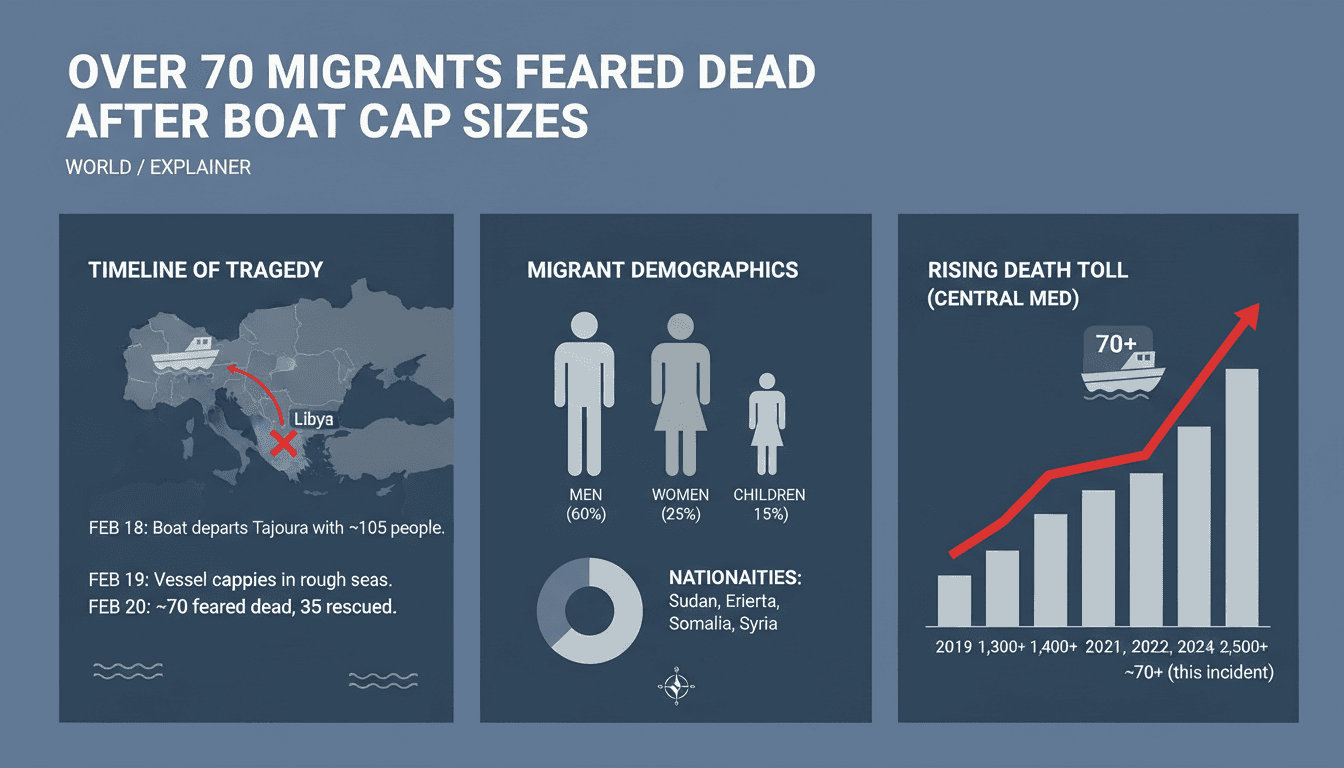
- A migrant boat capsized off the Libyan coast on April 4, 2026, carrying approximately 105 people, with at least 70 feared dead.
- Thirty-two survivors were rescued by merchant ships and taken to Lampedusa, Italy, while two bodies were recovered.
- The incident highlights ongoing migration pressures in the central Mediterranean, a route known for its high fatality rates.
The context you actually need
- Libya's role as a launch point: Since the 2011 overthrow of Muammar Gaddafi, Libya has become a primary departure point for migrants seeking to reach Europe, driven by conflict and economic instability.
- Deadliest migration route: The central Mediterranean remains the most perilous migration route globally, with at least 683 reported deaths or disappearances in 2026 alone, according to the International Organization for Migration (IOM).
- Policy implications: European Union policies have increasingly restricted legal migration pathways, pushing migrants to take dangerous routes and contributing to tragedies like this one.
What's really happening
The recent capsizing of a migrant boat off the Libyan coast is a stark reminder of the ongoing humanitarian crisis in the central Mediterranean. This incident, involving a lightweight wooden vessel carrying over 100 migrants, occurred amid rough weather conditions. The boat left Tajoura, Libya, and capsized within Libya's designated search-and-rescue zone, highlighting the perilous nature of such journeys.
Libya has long been a focal point for irregular migration, with many fleeing conflict and seeking better economic opportunities in Europe. The country’s political instability and the presence of militia-controlled coastal areas have created an environment where smuggling networks thrive. These networks often overload unseaworthy vessels, leading to tragic outcomes like the recent capsizing.
The European Union's restrictive migration policies have exacerbated the situation. By limiting legal entry pathways, the EU has inadvertently pushed migrants towards more dangerous routes. Humanitarian organizations, such as Sea-Watch and Mediterranea Saving Humans, have criticized these policies, arguing that they contribute to tragedies like this one. They describe the incident as a "tragic Easter shipwreck," emphasizing the need for urgent policy reform to ensure safer migration options.
The aftermath of the incident saw survivors receiving assistance from the International Organization for Migration (IOM) and UNHCR representatives in Lampedusa. However, the lack of formal statements from Libyan or EU authorities raises concerns about accountability and the future of migration policies. As the death toll continues to rise, the humanitarian crisis in the central Mediterranean remains unresolved, with no active search reported for the missing individuals.
This incident is not an isolated event; it is part of a larger pattern of migration tragedies that occur regularly in this region. As the demand for economic opportunities and safety continues to drive migration from sub-Saharan Africa and the Middle East, the need for comprehensive and humane migration policies becomes increasingly urgent.
Who feels it first (and how)
- Migrants: Those seeking refuge or better economic opportunities are at the highest risk of death and exploitation.
- Humanitarian organizations: NGOs face increased pressure to respond to crises and advocate for policy changes.
- European governments: Political pressure mounts to address migration issues and reform policies that contribute to these tragedies.
What to watch next
- Policy changes in the EU: Monitor any shifts in migration policy that could create safer legal pathways for migrants, which would directly impact future migration flows.
- Increased NGO activity: Watch for heightened efforts from humanitarian organizations to advocate for migrant rights and safety, influencing public opinion and policy.
- Migration statistics: Keep an eye on the number of migrant deaths and rescues in the central Mediterranean, as these figures will indicate the ongoing severity of the crisis.
The central Mediterranean is the deadliest migration route globally, with high fatality rates.
Humanitarian organizations will continue to advocate for policy reforms to prevent future tragedies.
The response from European governments and Libyan authorities regarding accountability and policy changes remains uncertain.
Insights by A47 Intelligence
English-language reporting on Saudi politics, policy, and society.
"Saudi Gazette reflects mainstream Saudi institutional perspectives."
— A47 Editor
70 feared dead after migrant boat capsizes off Libyan coast
A migrant boat carrying 105 people capsized off the coast of Libya, resulting in dozens missing and feared dead, according to NGOs Sea Watch and Mediterranea Saving Humans. Thirty-two survivors were rescued by commercial ships and taken to Lampedusa,...
European current affairs, EU politics, and regional developments.
"France 24 is viewed as a globally focused outlet with balanced coverage and a European perspective."
— A47 Editor
Two dead, dozens missing after migrant boat capsizes in Mediterranean
At least 70 people are reported missing after a migrant boat capsized in the Mediterranean Sea shortly after departing from the Libyan coast. An Italian NGO confirmed that two individuals have died, while 32 others were rescued from the water.
Regional and international reporting focused on Middle Eastern politics, diplomacy, and economics.
"Asharq Al-Awsat is a Saudi-owned international newspaper reflecting mainstream Gulf political perspectives."
— A47 Editor
Migrants Missing after Mediterranean Capsize: NGOs
A tragic incident has occurred in the Mediterranean Sea, where a boat carrying migrants capsized, leading to reports of dozens missing. This event highlights the ongoing dangers faced by individuals attempting to cross this perilous route in search o...