
Trump Announces Two-Week Ceasefire on Iran Conditional on Strait of Hormuz Reopening
Here's what it means for you.
If you rely on stable energy prices, this ceasefire could ease your costs and stabilize markets.
Why it matters
The ceasefire directly impacts global oil supply chains and market stability, affecting prices and economic conditions worldwide.
What happened (in 30 seconds)
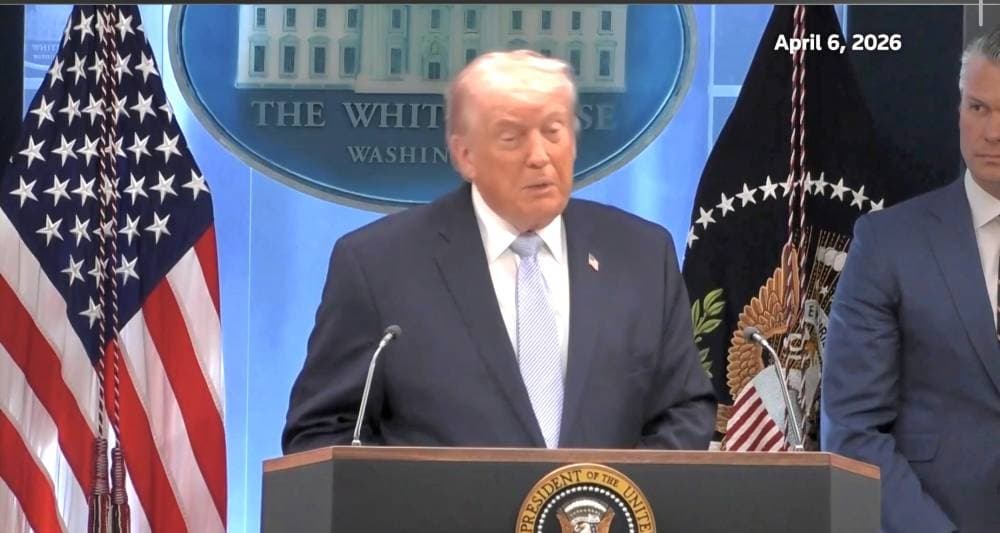
- On April 7, 2026, U.S. President Trump announced a two-week ceasefire on military strikes against Iran, contingent on reopening the Strait of Hormuz.
- Iran agreed to the ceasefire through Foreign Minister Abbas Araghchi, framing it as a basis for future negotiations.
- Oil prices plummeted to $94.75 per barrel, down 13.3% intraday, following the announcement, signaling market relief.
The context you actually need
- The crisis began on February 28, 2026, when U.S.-Israeli airstrikes killed Iran's Supreme Leader Ali Khamenei, escalating tensions and leading to a blockade of the Strait of Hormuz.
- The blockade reduced tanker traffic by over 90%, disrupting 20% of global oil supply and causing prices to surge to $126 per barrel.
- Pakistan mediated the ceasefire talks, highlighting the geopolitical complexities and the role of third-party nations in de-escalating conflicts.
What's really happening
The announcement of a ceasefire by President Trump marks a significant pivot in U.S.-Iran relations, driven by a confluence of military, economic, and diplomatic factors. The initial crisis, ignited by the U.S.-Israeli airstrikes, created a volatile environment in the Gulf, where Iran's retaliation included missile strikes on U.S. bases and a blockade of the Strait of Hormuz. This strategic waterway is crucial for global oil transport, and its closure had immediate repercussions on oil supply and prices.
The two-week ceasefire is not merely a pause in hostilities but a conditional agreement that reflects the precarious balance of power in the region. Iran's acceptance of the ceasefire, framed through a 10-point proposal, indicates a willingness to negotiate, albeit from a position of perceived strength following its military responses. The proposal includes demands such as U.S. troop withdrawal and sanctions relief, which are critical for Iran's economic recovery and regional influence.
The immediate impact of the ceasefire is evident in the oil markets, where Brent crude prices fell sharply, reflecting investor relief and a potential return to stability. This price drop is significant for global economies, especially those heavily reliant on oil imports. For Dubai and the UAE, the ceasefire alleviates concerns over supply disruptions and rising fuel costs, which had previously surged due to the blockade. The UAE's economy, heavily dependent on oil revenues, stands to benefit from stabilized prices and increased trade flows through key ports like Jebel Ali.
However, the ceasefire's success hinges on Iran's compliance with reopening the Strait of Hormuz and the subsequent negotiations in Islamabad. The geopolitical landscape remains fraught with risks, including potential Israeli military actions and ongoing tensions between the U.S. and Iran. The situation is fluid, and while the ceasefire offers a temporary reprieve, the underlying issues that led to the crisis remain unresolved.
Who feels it first (and how)
- Consumers in the UAE: Relief from soaring fuel prices and stabilized supply chains.
- Global oil traders: Immediate market reactions influencing trading strategies and investments.
- Businesses dependent on oil: Companies across sectors will experience fluctuations in operational costs due to changing fuel prices.
- Geopolitical analysts: Increased focus on Middle Eastern dynamics and implications for global security.
What to watch next
- Negotiations in Islamabad: The outcomes of these talks will determine the future of U.S.-Iran relations and regional stability.
- Oil price trends: Continued monitoring of Brent crude prices will indicate market reactions to geopolitical developments.
- Military actions by Israel: Any escalation in Israeli operations could disrupt the ceasefire and reignite tensions.
The ceasefire is conditional on Iran reopening the Strait of Hormuz.
Oil prices will remain volatile as markets react to ongoing negotiations and regional developments.
The long-term effectiveness of the ceasefire in achieving lasting peace in the region.
Insights by A47 Intelligence
Arabic-language digital news outlet covering UAE, regional, and international developments with broad general-news coverage.
"Al Ain News coverage typically blends UAE-focused reporting with wider Arab regional and international news."
— A47 Editor
كواليس الساعات الأخيرة قبل «هدنة إيران»
The United States and Iran have reached a two-week ceasefire following threats from President Donald Trump of unprecedented strikes against Tehran. This development marks a significant moment in U.S.-Iran relations, highlighting the ongoing tensions ...
Arabic-language coverage of Saudi, regional, and international affairs.
"Al Bilad offers mainstream Saudi newspaper coverage across domestic and broader Arab topics."
— A47 Editor
إسرائيل توافق على وقف إطلاق النار مع إيران ولبنان
A senior official from the White House announced that Israel has agreed to a temporary ceasefire with Iran and Lebanon, as part of a two-week truce declared by President Donald Trump shortly before the deadline for Iran to reopen the Strait of Hormuz...
Coverage of political affairs and regional developments from a Saudi perspective.
"Al Watan political coverage typically follows a mainstream Saudi framing of regional and national issues."
— A47 Editor
ترمب يعلّق قصف إيران أسبوعين وطهران تفتح هرمز - #عاجل
In a significant political and military development, U.S. President Donald Trump announced a two-week suspension of military strikes against Iran, aiming to facilitate a political settlement and a comprehensive ceasefire in a highly sensitive regiona...
Arabic-language coverage of political affairs and current events.
"Okaz political coverage typically follows mainstream Saudi framing on national and regional affairs."
— A47 Editor
ترمب يعلّق ضرب إيران أسبوعين مقابل فتح «هرمز».. اقتراب «اتفاق السلام»
U.S. President Donald Trump announced a two-week suspension of military operations against Iran, contingent upon the safe and complete opening of the Strait of Hormuz, following discussions with Pakistani Prime Minister Shehbaz Sharif and Army Chief ...