
Meta Platforms Implements AI Strategy to Mitigate Legal Risks from Social Media Lawsuits
Here's what it means for you.
If you're a professional in tech or law, understanding Meta's pivot to AI could inform your strategies in navigating emerging legal landscapes.
Why it matters
Meta's approach to leveraging AI in response to litigation could set a precedent for how tech companies manage legal risks and product design accountability.
What happened (in 30 seconds)
- Meta Platforms launched its new AI model, Muse Spark, amid ongoing litigation risks and recent courtroom losses.
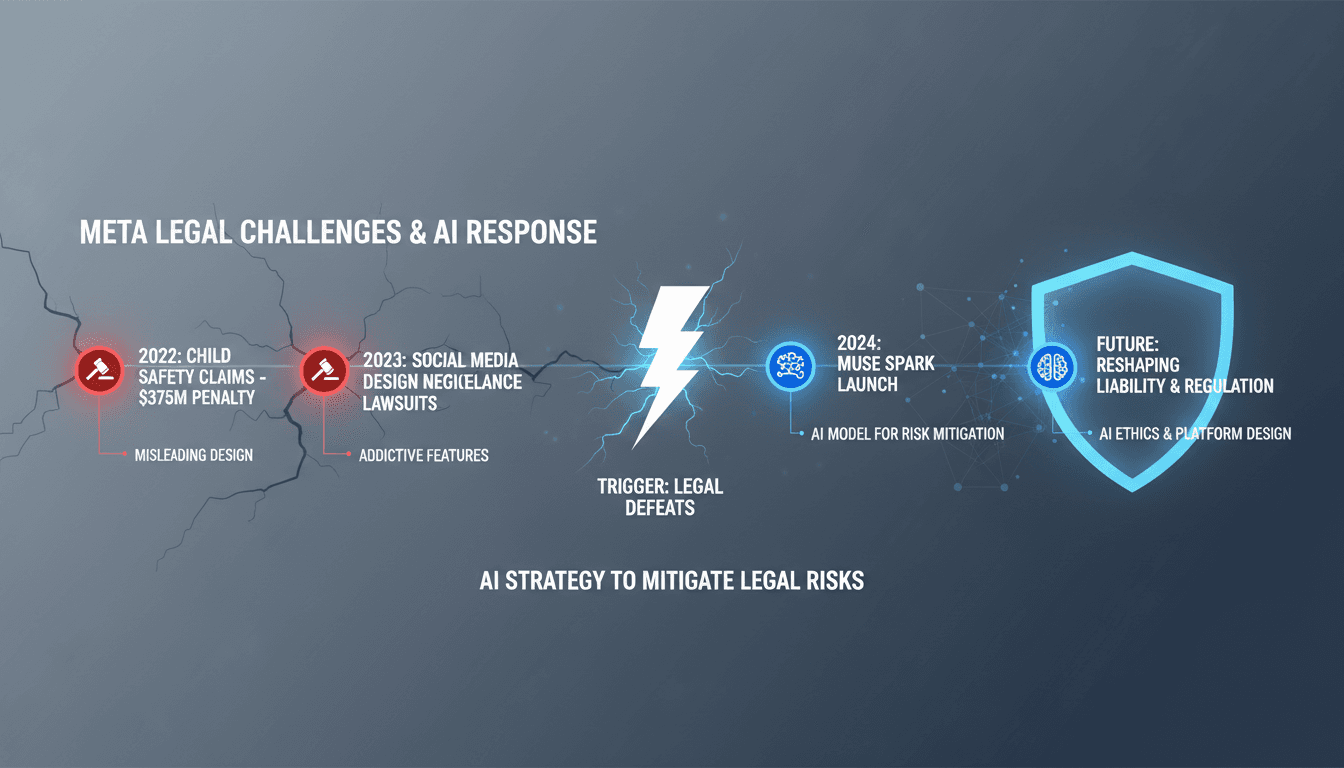
- Recent verdicts resulted in significant penalties, including a $375 million judgment in New Mexico for misleading child safety claims.
- The company is appealing these verdicts while attempting to shift focus to AI advancements as a buffer against legal challenges.
The context you actually need
- Litigation surge: Meta faces thousands of lawsuits alleging that its platforms contribute to youth mental health issues through addictive design features.
- Legal loopholes: Recent court decisions have bypassed traditional protections under Section 230 by focusing on product design negligence rather than user-generated content.
- Stock recovery: Following the AI launch, Meta's stock showed signs of recovery, indicating investor optimism about AI's potential to mitigate legal risks.
What's really happening
Meta Platforms is navigating a complex landscape of legal challenges while simultaneously pushing forward with advancements in artificial intelligence. The recent courtroom defeats have highlighted vulnerabilities in the company’s legal defenses, particularly as lawsuits increasingly focus on product design rather than user content. This shift in litigation strategy has the potential to undermine the long-standing protections offered by Section 230 of the Communications Decency Act, which has historically shielded tech companies from liability for user-generated content.
In March 2026, Meta faced a significant setback when a New Mexico jury imposed a $375 million penalty for misleading claims about child safety features. This was followed by a federal jury verdict in Los Angeles that assigned 70% liability to Meta in a landmark trial concerning social media addiction. These verdicts represent a critical turning point, as they signal a growing willingness among courts to hold tech companies accountable for their design choices, particularly when those choices are alleged to harm vulnerable populations like children.
In response to these legal pressures, Meta has pivoted to emphasize its AI capabilities, launching Muse Spark just days after the verdicts. This AI model is positioned as a tool that could not only enhance user experience but also potentially mitigate the risks associated with litigation. By investing in AI, Meta aims to demonstrate a commitment to innovation and user safety, which could help counteract negative perceptions and bolster its defense in ongoing lawsuits.
However, the effectiveness of this strategy remains uncertain. While AI advancements could provide new features and functionalities that improve user engagement, they may not fully address the core issues raised in the lawsuits. Investors have reacted positively to the AI launch, leading to a rebound in stock prices, but analysts caution that prolonged legal exposure could hinder Meta's long-term valuation recovery. The company’s ability to navigate these challenges will depend on its success in integrating AI into its platforms in a way that satisfies both users and regulators.
Who feels it first (and how)
- Tech professionals: Those involved in product design and development may need to rethink strategies to mitigate legal risks.
- Legal experts: Lawyers specializing in tech and consumer protection will see increased demand for services related to social media litigation.
- Investors: Stakeholders in Meta and similar companies will be closely monitoring stock performance and legal outcomes.
What to watch next
- Litigation outcomes: Keep an eye on the appeals process for Meta's recent verdicts, as these could set important precedents for tech liability.
- AI integration: Monitor how effectively Meta implements Muse Spark and whether it leads to improved user engagement and legal defenses.
- Regulatory responses: Watch for any changes in U.S. regulations regarding social media platforms, especially in light of these recent court decisions.
Meta is facing ongoing litigation and has launched a new AI model.
The outcomes of current appeals could influence future tech liability cases.
The long-term effectiveness of AI in mitigating legal risks remains to be seen.
Insights by A47 Intelligence
Tech business coverage, major deals, product launches, and Silicon Valley trends.
"WSJ’s tech section offers authoritative reporting on the intersection of technology and business, including exclusive industry analysis."
— A47 Editor
Meta Banks on AI to Clear the Smoke of Social-Media Lawsuits
Meta is currently facing significant legal challenges as it battles multiple lawsuits related to its social media practices, including recent court rulings that found the company liable for negligence in protecting users, particularly children, from ...
Coverage of national news and issues shaping the United States, including politics, economy, and society.
"The Wall Street Journal is one of the most respected financial and news publications in the U.S., known for its rigorous reporting and center-right editorial perspective."
— A47 Editor
Meta Removes Law-Firm Ads Recruiting Clients to Sue It
Meta has begun removing advertisements on its platforms that were aimed at recruiting clients for lawsuits against the company, following recent legal setbacks related to its social media practices. This decision comes in light of a jury ruling that ...
Tech business coverage, major deals, product launches, and Silicon Valley trends.
"WSJ’s tech section offers authoritative reporting on the intersection of technology and business, including exclusive industry analysis."
— A47 Editor
Meta Removes Law-Firm Ads Recruiting Clients to Sue It
Meta has begun removing advertisements on its platforms that were aimed at recruiting clients for lawsuits against the company, following a series of legal setbacks related to its social media practices. This decision comes after significant court ru...