
Bank of England and ECB Maintain Interest Rates Amid Energy Crisis from Middle East Conflict
Here's what it means for you.
If you’re in Europe or the UK, expect rising costs and potential economic stagnation as central banks navigate inflation pressures.
Why it matters
Central banks are balancing immediate inflationary pressures against the risk of stifling economic growth, impacting your purchasing power and investment decisions.
What happened (in 30 seconds)
- On April 30, 2026, the Bank of England and European Central Bank decided to keep interest rates unchanged amid surging fuel prices.
- Brent crude oil prices soared above $100 per barrel due to geopolitical tensions in the Middle East, leading to inflation rates of 3.3% in the UK and 3% in the Eurozone.
- Policymakers warned of potential stagflation, indicating that future rate hikes could be necessary if inflation persists.
The context you actually need
- The Strait of Hormuz, a crucial oil trade route, was effectively closed following U.S. and Israeli military actions against Iran, disrupting global energy supplies.
- Inflation rates in both the UK and Eurozone have risen sharply, with the UK experiencing a jump from 3% to 3.3% in March 2026, and the Eurozone from 1.9% to 3% in April 2026.
- Central banks are projecting scenarios that highlight the risk of second-round inflation effects, which could necessitate future interest rate hikes.
What's really happening
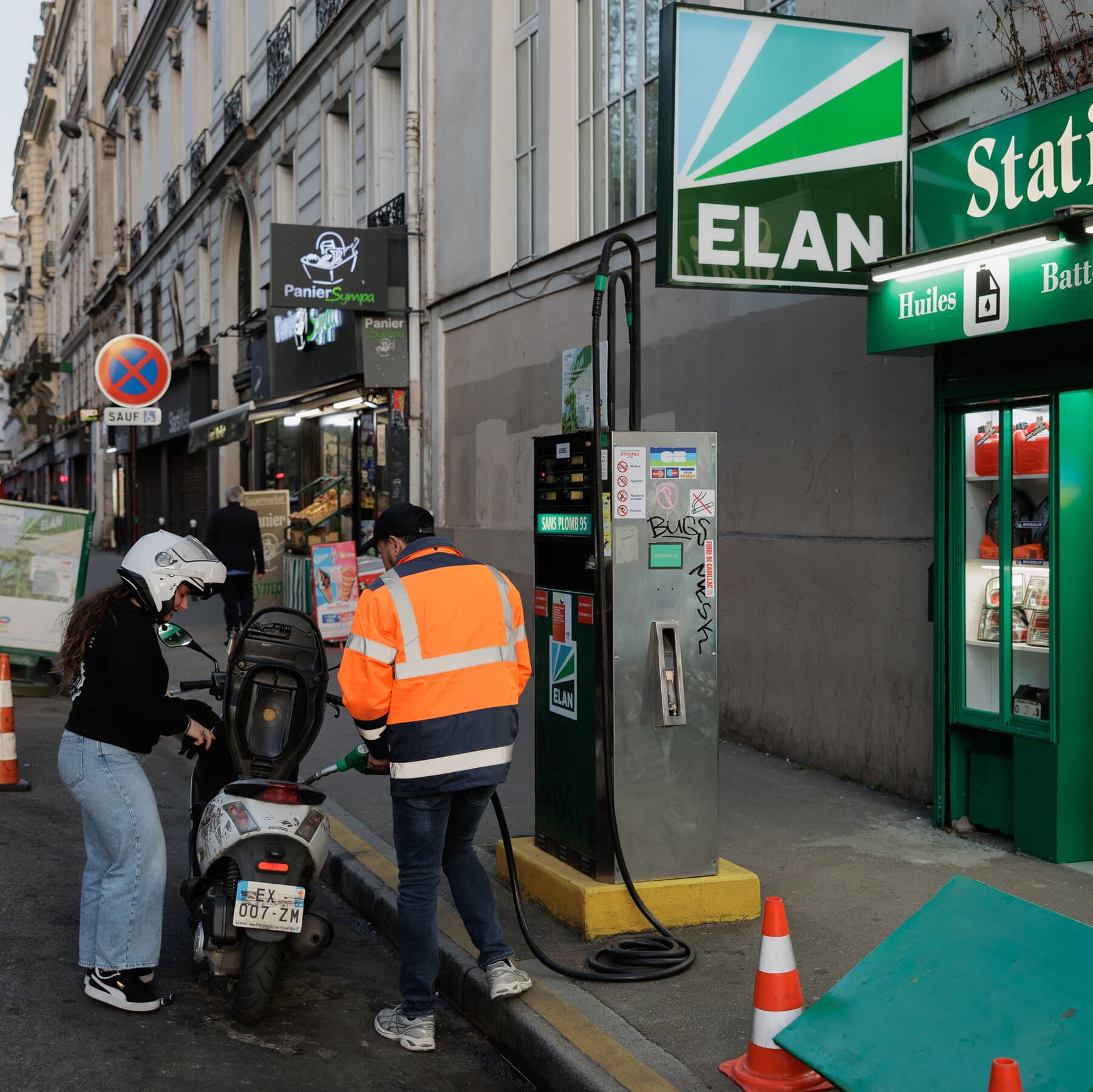
The decision by the Bank of England (BoE) and the European Central Bank (ECB) to maintain interest rates reflects a complex interplay of geopolitical events and economic realities. The closure of the Strait of Hormuz, a vital artery for global oil trade, has led to a significant spike in fuel prices, with Brent crude reaching a peak of $114.66 per barrel. This surge has immediate implications for inflation, which has accelerated to 3.3% in the UK and 3% in the Eurozone.
Central banks face a delicate balancing act. On one hand, they must respond to rising inflation driven by energy costs; on the other, they need to avoid stifling economic growth through aggressive rate hikes. The BoE's current rate stands at 3.75%, while the ECB holds at 2%. Both institutions have indicated that they are closely monitoring the situation, with the potential for future rate increases if inflationary pressures persist.
The energy crisis has not only affected fuel prices but has also led to broader economic implications. Analysts are warning of stagflation—a situation characterized by stagnant economic growth and high inflation. This scenario poses a significant risk to consumers and businesses alike, as rising costs could lead to decreased spending and investment.
In the UK, the inflationary pressures are compounded by a sluggish growth rate of just 0.1% quarterly. The IMF has downgraded growth forecasts for both the UK and Eurozone, indicating that the economic landscape is becoming increasingly precarious. The ECB and BoE have released projections that detail various scenarios, emphasizing the potential for second-round inflation effects that could further complicate monetary policy.
As the situation evolves, the markets are pricing in multiple rate increases later in 2026, reflecting a growing consensus that central banks may need to act decisively to combat inflation. However, the uncertainty surrounding the geopolitical landscape, particularly in the Middle East, adds another layer of complexity to the decision-making process.
Who feels it first (and how)
- Consumers: Higher fuel prices lead to increased costs for commuting and household expenses, impacting disposable income.
- Businesses: Companies reliant on energy-intensive operations face rising operational costs, which may lead to reduced profit margins.
- Investors: Market volatility may affect investment strategies, particularly in sectors sensitive to interest rate changes and inflation.
- Low-income households: These groups are disproportionately affected by rising costs, as they spend a larger share of their income on essentials like fuel and food.
What to watch next
- Inflation trends: Keep an eye on monthly inflation reports to gauge whether price pressures are stabilizing or worsening.
- Central bank communications: Statements from the BoE and ECB will provide insights into future monetary policy directions and potential rate hikes.
- Geopolitical developments: Monitor the situation in the Middle East, particularly any changes in conflict dynamics that could further impact energy prices.
Interest rates are currently held steady by both the BoE and ECB.
Future rate hikes may occur if inflation continues to rise.
The long-term impact of the Middle East conflict on global energy prices and economic growth remains uncertain.
This article was generated by AI from 8 verified sources and reviewed by A47 editorial systems.
UK and international business news, economics, and corporate coverage.
"The Guardian’s business section covers finance and markets with a progressive editorial tone."
— A47 Editor
Bank of England warns ‘higher inflation unavoidable’ after holding interest rates
The Bank of England has decided to maintain interest rates at 3.75%, citing the unpredictability of the ongoing conflict in the Middle East as a key factor influencing its decision. The central bank warned that higher inflation is unavoidable due to ...
Top international stories selected by The Guardian editors.
"The Guardian is known for its progressive editorial stance and in-depth analysis."
— A47 Editor
Bank of England warns ‘higher inflation unavoidable’ after holding interest rates
The Bank of England has decided to maintain interest rates at 3.75%, citing the unpredictability of the ongoing conflict in the Middle East as a key factor influencing its decision. The central bank warned that higher inflation is unavoidable due to ...
Global markets, investing, and macroeconomics from a premier financial newsroom.
"Bloomberg is respected for in-depth financial reporting and data-driven analysis."
— A47 Editor
ECB Officials See June Hike If Energy Prices Don’t Ease First
European Central Bank (ECB) officials are indicating a potential interest rate hike in June, contingent on developments in energy prices and the ongoing conflict in Iran. This decision reflects the ECB's assessment of economic conditions influenced b...
Editor-curated FT homepage stories spanning markets, business, world, and opinion.
"The Financial Times is a globally respected business publication with a centrist/center-left tone and strong markets focus."
— A47 Editor
Bank of England holds rates at 3.75% but says ‘ready to act’
The Bank of England's Monetary Policy Committee has decided to maintain interest rates at 3.75%, indicating readiness to adjust rates if the ongoing energy shock continues to impact the global economy. This decision reflects the bank's cautious stanc...
Corporate news, economic trends, and markets with UK and global scope.
"BBC News is widely regarded as reputable and impartial, with a public service mandate."
— A47 Editor
Bank of England says rates could rise as Iran war fuels inflation
The Bank of England has decided to maintain its interest rates at 3.75% while closely monitoring the inflationary impacts stemming from the ongoing conflict in Iran. This decision reflects concerns over rising energy prices and their potential effect...
United Kingdom-focused news including local politics, business, and social issues.
"BBC News is widely regarded as a reputable international news organization, known for its impartial tone and public service mandate."
— A47 Editor
Interest rates held at 3.75% as Bank of England hints of future rises over Iran war
The Bank of England has decided to maintain its interest rates at 3.75% while closely monitoring the inflationary impacts stemming from the ongoing conflict in Iran. This decision reflects concerns over rising energy prices and their potential effect...
UK and international business news, economics, and corporate coverage.
"The Guardian’s business section covers finance and markets with a progressive editorial tone."
— A47 Editor
Bank of England warns UK should brace for higher inflation due to Middle East war – video
The Bank of England has decided to maintain its interest rate at 3.75%, while cautioning that the UK should prepare for potential increases later this year due to rising inflation linked to the ongoing conflict in the Middle East. Governor Andrew Bai...
Global political, business, and cultural coverage from WSJ international desks.
"The Wall Street Journal offers extensive international reporting with a reputation for financial insight and a center-right editorial stance."
— A47 Editor
Europe’s Economy Stutters as War Drives Up Inflation
Europe's economy is facing challenges as the European Central Bank (ECB) and the Bank of England (BOE) have decided to maintain interest rates amid rising inflation driven by ongoing conflicts, particularly in the Middle East. This decision reflects ...
Social/economic commentary and analysis relevant to business and markets.
"WSJ blends data-driven economic insight with commentary on policy and society."
— A47 Editor
Both the ECB and BOE, facing a mix of weaker growth and higher inflation, held interest rates steady
Europe's economy is facing challenges as the European Central Bank (ECB) and the Bank of England (BOE) have decided to maintain interest rates amid rising inflation driven by ongoing conflicts, particularly in the Middle East. This decision reflects ...
Markets, economy, and company analysis from NYT’s business desk.
"The New York Times is a globally recognized newspaper offering authoritative reporting with a center-left editorial stance."
— A47 Editor
Rising Fuel Prices Force Policymakers to Weigh Excruciating Choices
The Bank of England and the European Central Bank have decided to maintain their interest rates as they assess the economic impact of rising fuel prices, largely driven by the ongoing conflict in Iran. This situation has led to increased inflation, p...
Global markets, investing, and macroeconomics from a premier financial newsroom.
"Bloomberg is respected for in-depth financial reporting and data-driven analysis."
— A47 Editor
BOE Interest-Rate Decision | Special Coverage
The Bank of England (BOE) has decided to maintain its interest rate at 3.75%, with several policymakers indicating that future hikes may be considered due to rising oil prices and inflationary pressures. This decision reflects a cautious approach ami...