
Western Pharmaceutical Companies Increase Licensing Agreements with Chinese Biotechs
Here's what it means for you.
If you work in healthcare or investment, this trend could reshape your access to innovative therapies and market opportunities.
Why it matters
This surge in licensing deals reflects a strategic pivot in the pharmaceutical industry, driven by the need for efficiency and innovation.
What happened (in 30 seconds)
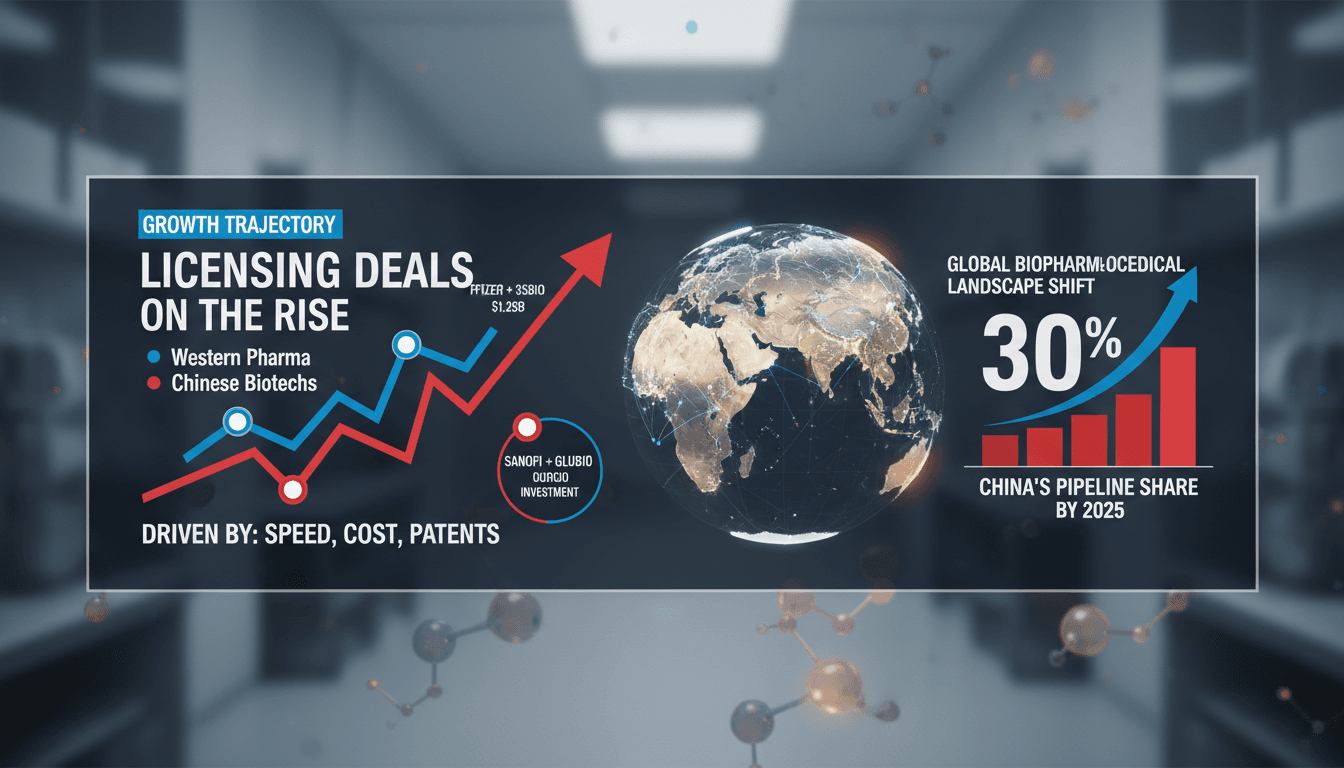
- Big Pharma is partnering with Chinese biotechs. Pfizer and Sanofi are leading the charge with significant investments, including a $1.25 billion deal with 3SBio.
- Record deal values are emerging. In 2025, 70 transactions worth nearly $5.6 billion were recorded, with 30 deals totaling $1.9 billion in 2026 year-to-date.
- China's biotech landscape is evolving rapidly. The country is projected to contribute 30% of the global experimental drug pipeline by 2025, thanks to faster development times and lower costs.
The context you actually need
- Government support has fueled biotech growth in China. Since the 1980s, initiatives have prioritized biotechnology, enabling quicker clinical trials and fostering innovation.
- Western firms face pressure from patent expirations. As patents expire and R&D costs rise, licensing Chinese assets offers a more efficient path to market.
- Technological advancements are key. Innovations like molecular glue degraders are positioning Chinese firms as leaders in addressing previously undruggable diseases.
What's really happening
The recent surge in licensing deals between Western pharmaceutical giants and Chinese biotechs is a multifaceted phenomenon driven by several key factors. First, the Chinese government has prioritized biotechnology as a national initiative since the 1980s, investing heavily in research infrastructure, regulatory frameworks, and educational programs. This has resulted in a streamlined process for clinical trials, allowing them to be completed in as little as 2-4 months compared to the 6-9 months typical in the U.S. This rapid development cycle is attractive to Western firms facing increasing pressure from patent expirations and rising research and development costs.
As a result, major players like Pfizer and Sanofi are increasingly looking to China for innovative drug candidates. For instance, Pfizer's $1.25 billion deal with 3SBio for a cancer bispecific antibody exemplifies this trend. Similarly, Sanofi's $30 million investment in GluBio Therapeutics aims to advance treatments for sickle cell disease. These partnerships not only provide Western firms with access to cutting-edge therapies but also allow them to mitigate the risks associated with their own R&D pipelines.
Moreover, the technological advancements emerging from Chinese biotechs, particularly in areas like molecular glue degraders, are reshaping the landscape of drug development. These innovations target diseases that have long been considered undruggable, thus expanding the potential market for new therapies. The aggregate activity in this sector has been significant, with 70 deals worth $5.6 billion in 2025 and projections indicating that 2026 could see a 50-60% increase in deal values.
However, this trend is not without its challenges. U.S. policymakers have raised national security concerns regarding dependency on Chinese biotech, leading to legislative efforts like the Biosecure Act aimed at restricting dealings with firms linked to the Chinese military. This regulatory environment could complicate future partnerships and investments.
In summary, the acceleration of licensing deals between Western pharmaceutical companies and Chinese biotechs is a strategic response to the evolving landscape of drug development, characterized by rapid innovation and cost efficiency. As this trend continues, it will likely reshape the global pharmaceutical market and influence the availability of new therapies.
Who feels it first (and how)
- Pharmaceutical companies: They gain access to innovative therapies and reduce R&D costs.
- Investors: Opportunities arise in biotech firms, particularly those involved in licensing deals.
- Patients: Potentially faster access to new treatments as drug development accelerates.
- Healthcare professionals: Changes in treatment options and protocols as new drugs enter the market.
What to watch next
- Regulatory changes in the U.S.: Watch for developments related to the Biosecure Act and its impact on partnerships with Chinese firms.
- Market performance of Chinese biotechs: Monitor stock movements and investment trends in Chinese biotech companies following major licensing deals.
- Innovation pipeline updates: Keep an eye on advancements in molecular glue technology and other breakthroughs that could emerge from these partnerships.
The trend of Western firms partnering with Chinese biotechs is accelerating.
Deal values will continue to rise, potentially exceeding previous records.
The long-term impact of U.S. regulatory changes on these partnerships remains uncertain.
This article was generated by AI from 3 verified sources and reviewed by A47 editorial systems.
Tech business coverage, major deals, product launches, and Silicon Valley trends.
"WSJ’s tech section offers authoritative reporting on the intersection of technology and business, including exclusive industry analysis."
— A47 Editor
Big Pharma Is Turning to China for the Newest Drug Ideas
Big Pharma is increasingly looking to China for innovative drug ideas, as Chinese biotechs are noted for their speed and lower costs in drug research. This shift suggests a growing reliance on China's capabilities in the pharmaceutical sector.
U.S. business news, corporate developments, and economy.
"The Wall Street Journal is respected for deep financial and economic reporting with a center-right editorial perspective."
— A47 Editor
Big Pharma Is Turning to China for the Newest Drug Ideas
Big Pharma is increasingly looking to China for innovative drug ideas, as Chinese biotechs are noted for their speed and lower costs in drug research. This shift indicates a growing recognition of China's capabilities in the pharmaceutical sector, wh...
Public health, medical research, healthcare policy, and pharmaceutical developments.
"Dow Jones is a major financial news provider with a professional tone and broad coverage, including specialized health-sector reporting."
— A47 Editor
Big Pharma Is Turning to China for the Newest Drug Ideas
Big Pharma is increasingly looking to China for innovative drug ideas, as Chinese biotechs demonstrate faster development times and lower costs in drug research. This shift indicates a growing reliance on China's capabilities in the pharmaceutical se...