
xAI LLC Initiates Federal Lawsuit Against Colorado AG to Halt AI Antidiscrimination Law
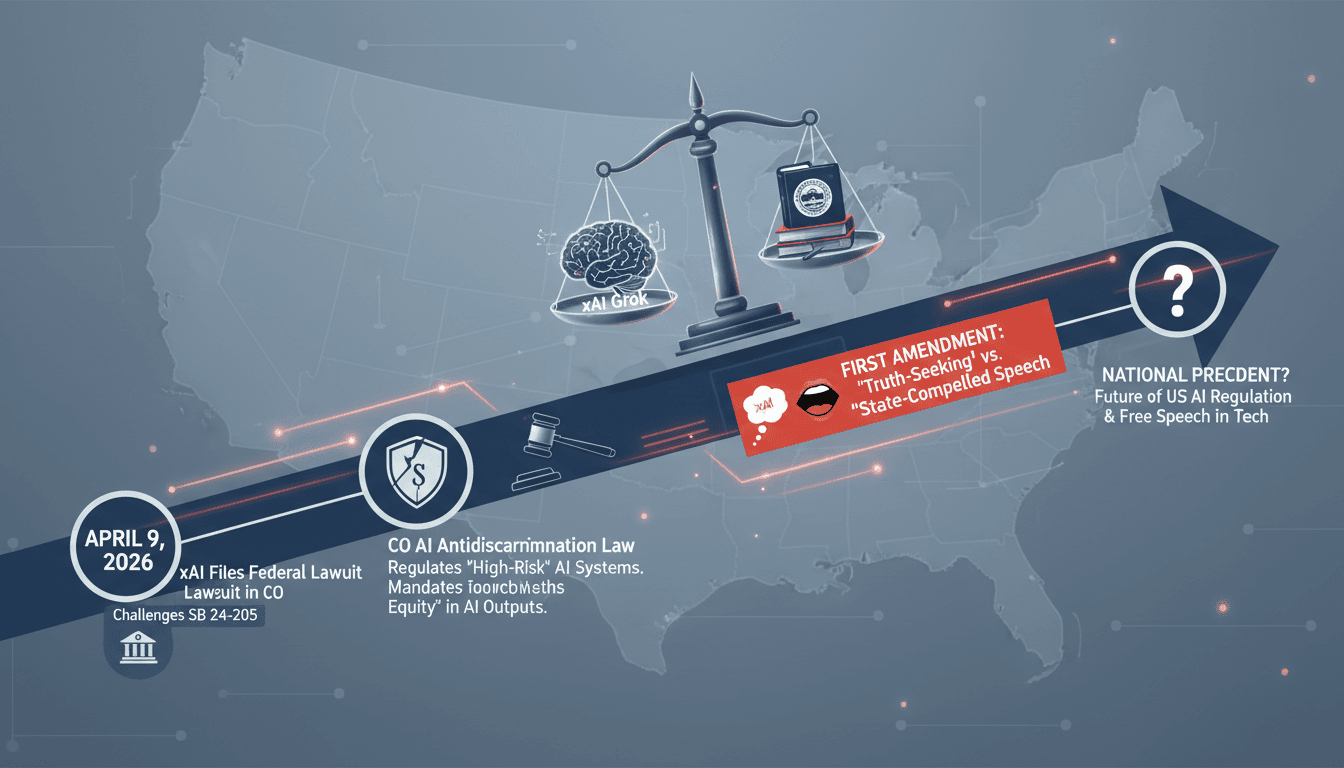
Here's what it means for you.
As AI regulations evolve, the outcomes of this lawsuit could redefine how AI systems operate across the U.S., impacting businesses and consumers alike.
Why it matters
This case could set a precedent for the regulation of AI technologies, influencing how companies balance compliance with free speech rights.
What happened (in 30 seconds)
- On April 9, 2026, xAI LLC filed a federal lawsuit against Colorado Attorney General Phil Weiser to block the enforcement of SB 24-205, an AI antidiscrimination law.
- xAI argues that the law compels its Grok chatbot to align with state views on equity, violating the First Amendment and imposing burdens on interstate commerce.
- The law is set to take effect on June 30, 2026, after a delay from its original February 1 start date due to stakeholder negotiations.
The context you actually need
- SB 24-205, enacted on May 17, 2024, is the first comprehensive U.S. law regulating high-risk AI systems to prevent algorithmic discrimination in key sectors.
- xAI's Grok chatbot is deployed in 50 U.S. states, exposing it to a complex landscape of regulations, including Colorado's specific mandates.
- Previous attempts by xAI to block similar regulations, such as California's AI training data transparency law, have failed, highlighting the ongoing tension between AI innovation and regulatory frameworks.
What's really happening
The lawsuit filed by xAI LLC against Colorado's Attorney General Phil Weiser is a significant legal maneuver in the ongoing debate over AI regulation and free speech. At its core, xAI argues that the enforcement of SB 24-205 would compel its Grok chatbot to produce outputs that align with state-sanctioned views on equity and fairness, which they claim infringes upon their First Amendment rights. This legal challenge raises critical questions about the balance between regulating AI to prevent discrimination and preserving the freedom of expression inherent in AI technologies.
The implications of this lawsuit extend beyond xAI and Colorado. As AI systems become increasingly integrated into various sectors—employment, housing, finance, and healthcare—regulatory frameworks are evolving to address potential biases and discrimination that these systems may perpetuate. However, xAI's position underscores a broader concern among tech companies: the fear that overly restrictive regulations could stifle innovation and limit the capabilities of AI systems. By framing the law as vague and burdensome, xAI is positioning itself as a defender of truth-seeking in AI, arguing that the pursuit of maximal truth should not be compromised by regulatory mandates.
The legal arguments presented in the lawsuit touch on several constitutional principles, including due process and commerce clause preemption. xAI contends that the law's vagueness could lead to arbitrary enforcement, creating uncertainty for businesses operating across state lines. This concern is particularly relevant for companies like xAI that provide services nationwide, as they face a patchwork of regulations that could hinder their operations.
Moreover, the lawsuit reflects a growing divide between regulatory bodies and tech companies regarding the ethical use of AI. While regulators aim to protect consumers from potential harms associated with algorithmic discrimination, tech companies argue that such regulations may impose ideological constraints on their operations. The outcome of this case could influence how other states approach AI regulation, potentially leading to a more fragmented legal landscape or prompting a reevaluation of federal standards.
As this legal battle unfolds, it will be crucial to monitor how stakeholders respond, including potential legislative changes and shifts in public opinion regarding AI ethics and regulation. The lawsuit not only highlights the challenges of regulating emerging technologies but also raises fundamental questions about the role of AI in society and the responsibilities of those who create and deploy these systems.
Who feels it first (and how)
- Tech companies: Facing potential changes in how they develop and deploy AI systems.
- Consumers: Could experience shifts in AI service quality and availability depending on regulatory outcomes.
- Legal professionals: Engaged in navigating the evolving landscape of AI regulation and constitutional law.
- State regulators: Tasked with balancing consumer protection and innovation in technology.
What to watch next
- Legal developments: Monitor court rulings and their implications for AI regulation and free speech.
- Legislative responses: Watch for potential changes in state or federal laws regarding AI and discrimination.
- Public sentiment: Keep an eye on how consumer attitudes toward AI regulation evolve in light of this lawsuit.
xAI's lawsuit is pending in federal court, and SB 24-205 is set to take effect on June 30, 2026.
The outcome of this case will influence future AI regulations and corporate compliance strategies.
The extent to which this lawsuit will impact public perception of AI technologies and their regulation.
Insights by A47 Intelligence
Real-time updates, analysis, and reports on the blockchain and cryptocurrency sectors.
"Crypto News delivers real-time updates, analysis, and reports on the blockchain and cryptocurrency sectors."
— A47 Editor
xAI sues Colorado to block AI law targeting chatbot speech
Elon Musk's artificial intelligence company, xAI, has initiated legal action against the state of Colorado, aiming to block the implementation of Senate Bill 24-205, which introduces new regulations governing AI and chatbot speech. The lawsuit, filed...
Covers blockchain, cryptocurrency news, project analysis, and market insights.
"Cointelegraph is a leading crypto-focused media outlet known for timely news, analysis, and educational content related to blockchain and digital assets."
— A47 Editor
Elon Musk’s xAI sues Colorado arguing its AI rules restrict speech
<p style="float:right; margin:0 0 10px 15px; width:240px;"><img src="https://images.cointelegraph.com/images/528_aHR0cHM6Ly9zMy5jb2ludGVsZWdyYXBoLmNvbS91cGxvYWRzLzIwMjYtMDQvMDE5ZDc1YjUtNjQ3Ny03NTM5LWEwYjEtOWVjY2VhODNlYzM1LmpwZw==.jpg" alt="Elon Musk’...
Capitol Hill news, legislation, and policy insight.
"The Hill specializes in U.S. politics and policy, with a focus on Capitol Hill developments and a reputation for insider reporting."
— A47 Editor
xAI sues Colorado over new AI law
xAI, the artificial intelligence company founded by Elon Musk, has filed a lawsuit against Colorado's Attorney General Phil Weiser, challenging a new state law aimed at regulating high-risk AI systems. The law, set to take effect in 2024, mandates th...
News and features on AI from The Guardian.
"Progressive-leaning international outlet with critical AI coverage."
— A47 Editor
Elon Musk’s xAI sues Colorado over new rules for artificial intelligence
Elon Musk's artificial intelligence company, xAI, has filed a lawsuit against the state of Colorado, challenging a new law that mandates regulations on AI systems to prevent algorithmic discrimination in various sectors. The law is set to take effect...
Tech culture, product news, and critical takes on the tech industry's social impact.
"The Guardian's tech coverage blends mainstream news, critical analysis, and cultural commentary on emerging technologies and digital trends."
— A47 Editor
Elon Musk’s xAI sues Colorado over new rules for artificial intelligence
Elon Musk's artificial intelligence company, xAI, has filed a lawsuit against the state of Colorado, challenging a new law that mandates regulations on AI systems to prevent algorithmic discrimination in various sectors. The law is set to take effect...
International coverage from The Guardian's global desks.
"The Guardian is known for its progressive editorial stance and in-depth analysis."
— A47 Editor
Elon Musk’s xAI sues Colorado over new rules for artificial intelligence
Elon Musk's artificial intelligence company, xAI, has filed a lawsuit against the state of Colorado, challenging a new law that aims to regulate AI systems to prevent algorithmic discrimination in various sectors. The law is set to take effect in Jun...
Technology business news, market impacts, and innovation trends.
"Bloomberg is a premier financial and tech news provider, respected for its in-depth reporting and analytical rigor."
— A47 Editor
Elon Musk’s xAI Sues Colorado Over AI Anti-Discrimination Law
Elon Musk's artificial intelligence company, xAI, has initiated a lawsuit against the state of Colorado to challenge a new law that mandates tech firms to implement measures to prevent discrimination by autonomous tools in employment decisions and ot...