
US Aluminum Billet Premiums Rise 12% Due to Iran War Supply Disruptions
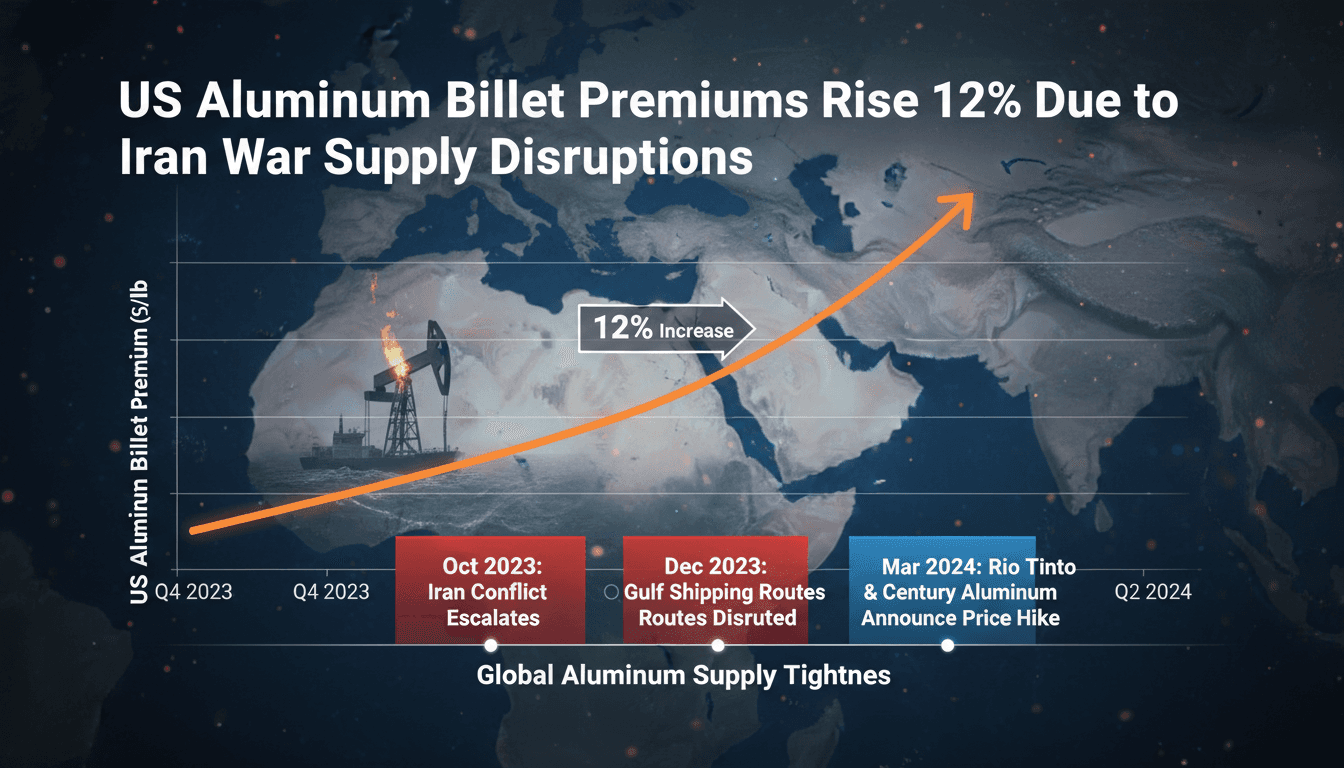
Here's what it means for you.
If you're in construction or manufacturing, expect higher costs and potential project delays.
Why it matters
This price increase reflects significant supply chain disruptions that could ripple through various industries reliant on aluminum.
What happened (in 30 seconds)
- Rio Tinto and Century Aluminum raised US aluminum billet premiums by approximately 12%, adding 3 cents per pound or $110 per ton above pre-war levels.
- The Iran war disrupted nearly 20% of US aluminum imports from the Persian Gulf, pushing buyers to domestic markets with tight supplies.
- Global aluminum prices surged over 10% since the conflict began, with the US Midwest premium reaching a record $1.1325 per pound.
The context you actually need
- US aluminum premiums represent the additional cost over London Metal Exchange benchmarks for high-grade aluminum delivery, which has been rising due to tariffs and low inventories.
- The Iran war, escalating in late February 2026, has severely impacted Gulf producers, halting output and exacerbating existing supply tightness.
- Aluminum's role in construction and manufacturing makes these price changes particularly impactful, as they can lead to increased costs for consumers and businesses alike.
What's really happening
The recent increase in aluminum billet premiums by Rio Tinto and Century Aluminum is a direct response to the ongoing disruptions caused by the Iran war, which began in late February 2026. The conflict has led to significant strikes on key Gulf producers, including Aluminium Bahrain and Emirates Global Aluminium, halting their operations and thereby affecting nearly 20% of US aluminum imports. This situation has forced US buyers to turn to domestic sources, where supplies are already tight due to previous tariffs and low inventories.
In 2025, US tariffs on aluminum imports doubled to 50%, driving premiums above $1 per pound by early 2026. The current geopolitical climate has exacerbated these issues, with the US Midwest aluminum premium reaching a record $1.1325 per pound. This price hike of 12%—equivalent to $110 per ton—reflects the market's response to these supply chain disruptions. As a result, Rio Tinto has begun promoting multi-year contracts at these elevated rates, indicating a strategic shift to secure pricing stability amid uncertainty.
The ripple effects of these changes are significant. Producers are leveraging the situation to raise prices, while buyers face intensified competition for limited supplies. The aluminum market is expected to remain volatile, with forecasts suggesting prices could rise to between $3,700 and $4,000 per ton if disruptions persist. This scenario not only affects manufacturers but also consumers, as increased costs are likely to be passed down the supply chain.
Moreover, the situation is compounded by the fact that aluminum is a critical material in various sectors, including construction, automotive, and aerospace. As these industries grapple with rising costs, the potential for project delays and increased consumer prices looms large. The interconnectedness of global supply chains means that disruptions in one region can have far-reaching implications, affecting everything from housing prices to manufacturing timelines.
Who feels it first (and how)
- Construction companies: Facing higher material costs, leading to increased project budgets and potential delays.
- Manufacturers: Experiencing elevated costs for aluminum components, impacting pricing strategies and profit margins.
- Consumers: Likely to see increased prices for goods that rely on aluminum, such as appliances and vehicles.
- Investors: Companies like Century Aluminum and Alcoa may see stock price fluctuations based on market reactions to supply chain disruptions.
What to watch next
- Domestic sourcing trends: Watch for shifts in sourcing strategies as companies adapt to tighter supplies and higher costs.
- Global aluminum prices: Keep an eye on LME futures and how they respond to ongoing geopolitical tensions and supply chain disruptions.
- Market reactions: Monitor stock performance of aluminum producers and related sectors, as price hikes could lead to volatility.
US aluminum premiums have risen significantly due to supply disruptions.
Prices will continue to rise if the Iran war persists and supply chains remain disrupted.
The long-term impacts on consumer prices and project timelines across various industries.
This article was generated by AI from 2 verified sources and reviewed by A47 editorial systems.
Market-moving headlines impacting equities, bonds, and related risk assets.
"Real-time catalysts and volatility drivers across indices and sectors."
— A47 Editor
Rio Tinto, Century Aluminum raise US aluminum premiums 12%
Rio Tinto and Century Aluminum have announced a 12% increase in US aluminum premiums, reflecting adjustments in market conditions and pricing strategies. This decision is expected to impact the pricing landscape for aluminum products in the United St...
Global markets, investing, and macroeconomics from a premier financial newsroom.
"Bloomberg is respected for in-depth financial reporting and data-driven analysis."
— A47 Editor
Top Aluminum Makers Hike US Surcharge as War Disrupts Supply
Rio Tinto Group and Century Aluminum Co. have increased premiums on a key semi-processed aluminum product in the United States by approximately 12% in recent weeks. This price hike follows disruptions in imports from the Middle East due to the ongoin...