
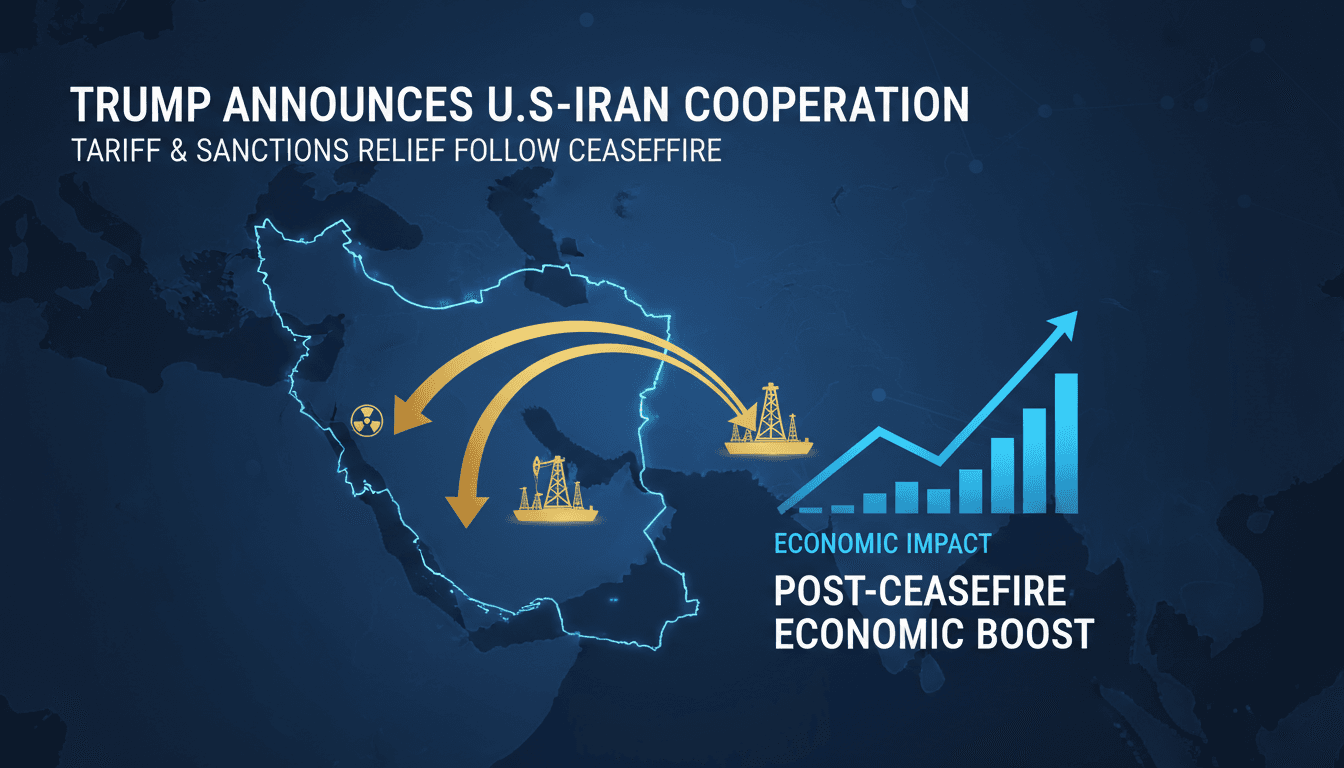
Trump Announces U.S.-Iran Cooperation on Tariff and Sanctions Relief After Ceasefire
Here's what it means for you.
If you’re in the oil or trade sectors, expect fluctuating prices and shifts in market dynamics as U.S.-Iran relations evolve.
Why it matters
This diplomatic breakthrough could stabilize global oil markets and influence trade routes critical for international commerce.
What happened (in 30 seconds)
- On April 8, 2026, U.S. President Donald Trump announced a cooperative approach with Iran regarding tariff and sanctions relief following a two-week ceasefire.
- The ceasefire was part of a broader agreement that included prohibitions on uranium enrichment and the removal of buried nuclear material.
- Global stock futures surged and oil prices dropped after the announcement, signaling market relief from previous tensions.
The context you actually need
- Escalating tensions earlier in 2026 included U.S. threats of tariffs and military strikes against Iranian nuclear sites, leading to a crisis in the Strait of Hormuz.
- A ceasefire agreement, mediated partly by Pakistan, allowed for diplomatic discussions on a 15-point U.S. proposal aimed at curbing Iran's nuclear capabilities.
- Trump's announcement included a potential 50% tariff on arms suppliers to Iran, indicating a significant shift in U.S. trade policy and its approach to sanctions.
What's really happening
The recent announcement by President Trump marks a significant pivot in U.S.-Iran relations, driven by a combination of geopolitical strategy and economic incentives. The two-week ceasefire, which followed intense military posturing and threats of tariffs, has opened a window for dialogue that could reshape the landscape of Middle Eastern diplomacy.
The U.S. has long viewed Iran's nuclear ambitions as a threat, leading to a series of sanctions designed to curb its capabilities. However, the regime change in Iran and the subsequent agreement on key points of the U.S. proposal suggest a willingness from both sides to explore a more cooperative framework. This includes prohibitions on uranium enrichment and the removal of nuclear material, which are critical steps toward reducing tensions.
From an economic perspective, the potential for tariff relief is particularly significant. The U.S. has threatened a 50% tariff on goods from countries supplying military arms to Iran, which could have far-reaching implications for international trade. This threat serves as both a bargaining chip and a warning to allies and adversaries alike, emphasizing the U.S. commitment to curbing Iran's military capabilities while also seeking to stabilize the region.
The implications of this announcement extend beyond just U.S.-Iran relations. For Dubai and the broader UAE, the reopening of the Strait of Hormuz and stabilized oil prices—now dropping below $100 per barrel—could ease inflationary pressures and secure vital trade flows. This is crucial for the UAE's economy, which relies heavily on oil exports and regional commerce.
Moreover, the global market's immediate reaction—surging stock futures and falling oil prices—indicates a collective sigh of relief among investors. The prospect of a more stable Middle East could encourage investment and economic growth, particularly in sectors directly affected by oil prices and trade routes.
However, the situation remains fluid. While the ceasefire and negotiations are promising, the underlying tensions and historical animosities between the U.S. and Iran cannot be overlooked. The success of these talks will depend on the commitment of both parties to adhere to the agreed-upon terms and the ability to navigate the complex geopolitical landscape that continues to evolve.
Who feels it first (and how)
- Oil traders: Immediate fluctuations in oil prices will impact trading strategies and profit margins.
- Logistics companies: Changes in trade routes through the Strait of Hormuz will affect shipping costs and schedules.
- Investors: Stock market reactions will influence investment decisions across various sectors, particularly energy and defense.
- Middle Eastern governments: Regional stability will impact diplomatic relations and economic partnerships.
What to watch next
- Negotiation outcomes: Watch for developments in U.S.-Iran talks regarding the 15-point proposal and any agreements on sanctions relief, as these will shape market expectations.
- Oil price trends: Monitor fluctuations in oil prices, particularly as they relate to the stability of the Strait of Hormuz and global supply chains.
- Geopolitical responses: Observe reactions from other Middle Eastern nations and global powers, as shifts in U.S.-Iran relations may prompt strategic realignments.
A ceasefire is currently in effect, and negotiations are ongoing.
Oil prices will stabilize, benefiting economies reliant on oil exports, such as the UAE.
The long-term adherence to the terms of the ceasefire and the effectiveness of the proposed sanctions relief.
Insights by A47 Intelligence
Regional coverage and analysis focused on politics, diplomacy, and business across the Middle East.
"Al-Monitor is known for analytical reporting on Middle East politics and policy developments."
— A47 Editor
Trump says US will work closely with Iran, discuss sanctions
The United States, under President Donald Trump, has announced a two-week ceasefire with Iran, which includes discussions on tariff and sanctions relief. This decision follows escalating military tensions and comes just before a deadline for Iran to ...
Right-of-center views on political news.
"The Washington Times is a conservative-leaning newspaper known for its political coverage and advocacy of right-of-center viewpoints."
— A47 Editor
Trump says U.S. will work with new leaders in Iran for lasting peace deal
President Trump announced a two-week ceasefire agreement with Iran, aiming to transition from a temporary halt in hostilities to a lasting peace that prevents Iran from developing nuclear weapons. This agreement includes Iran's commitment to reopen t...
Breaking news, politics, business, and entertainment from the U.S. and around the world.
"The New York Post is a tabloid-format newspaper known for its sensationalist headlines and conservative-leaning editorial tone."
— A47 Editor
Trump declares Iran cease-fire deal could lead to ‘Golden Age of the Middle East,’ boasts ‘big money will be made’
President Donald Trump announced a two-week ceasefire with Iran, expressing optimism that this agreement could lead to a 'Golden Age of the Middle East' and significant economic opportunities. The ceasefire, facilitated by Pakistan, allows Iran to re...