
Yuga Labs settles trademark infringement lawsuit against Ryder Ripps and Jeremy Cahen
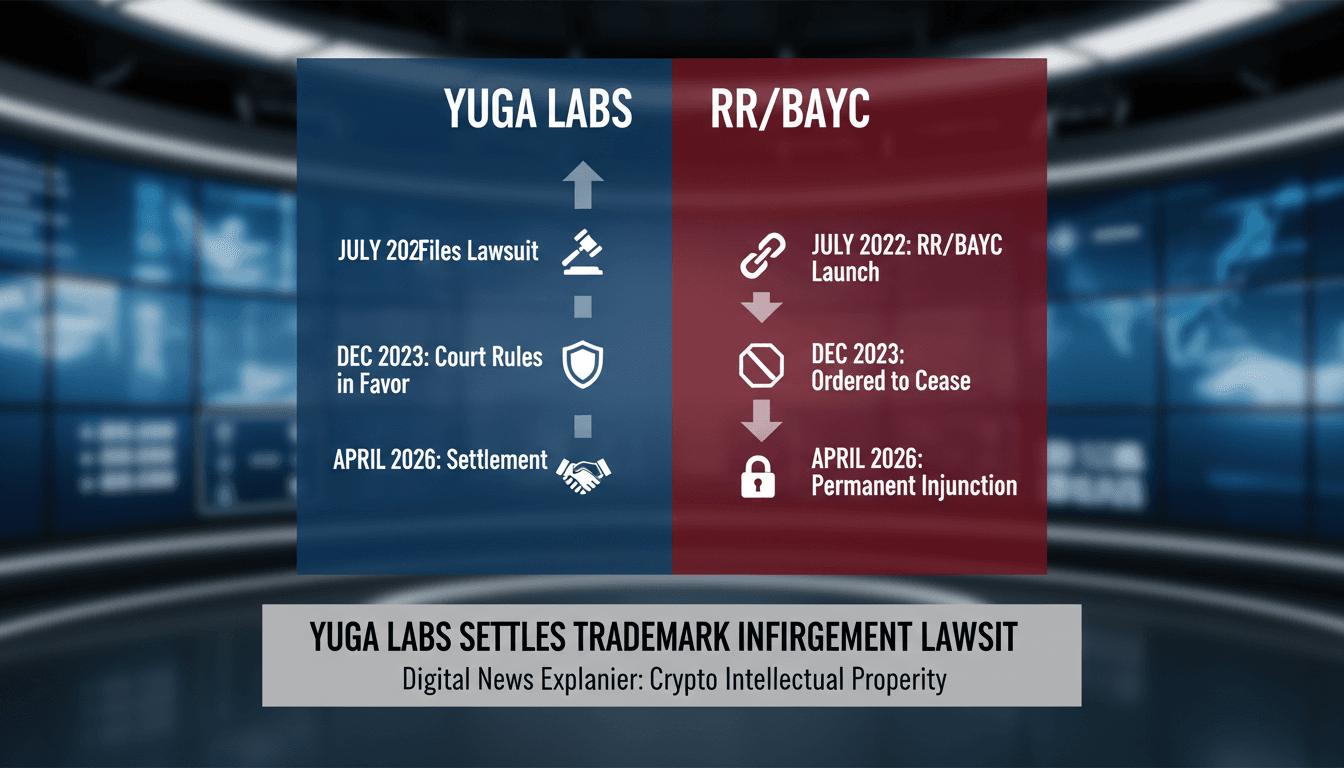
Here's what it means for you.
If you’re involved in the NFT space, this settlement reinforces the importance of intellectual property rights and the risks of derivative works.
Why it matters
This case highlights the ongoing tensions between artistic expression and trademark protections in the rapidly evolving NFT market.
What happened (in 30 seconds)
- Yuga Labs settled its 2022 lawsuit against Ryder Ripps and Jeremy Cahen on April 8, 2026, over trademark infringement related to the RR/BAYC NFT collection.
- The settlement includes a proposed permanent injunction preventing the defendants from using Yuga's trademarks and imagery, alongside asset transfers to Yuga Labs.
- Financial terms remain undisclosed, but the case has implications for how derivative NFT projects are viewed under U.S. intellectual property law.
The context you actually need
- Yuga Labs launched the Bored Ape Yacht Club (BAYC) in April 2021, which became a leading NFT collection during the crypto boom.
- Ryder Ripps accused Yuga of embedding hidden symbols in BAYC designs, prompting him and Cahen to create the RR/BAYC collection as a critique.
- Yuga Labs filed a lawsuit in July 2022, claiming trademark infringement and cybersquatting, which led to a series of court rulings before the settlement.
What's really happening
The settlement between Yuga Labs and Ryder Ripps marks a significant moment in the ongoing legal discourse surrounding NFTs and intellectual property. The case began in July 2022 when Yuga Labs accused Ripps and Cahen of infringing on its trademarks by creating the RR/BAYC collection, which closely mirrored the original BAYC NFTs. This situation was further complicated by Ripps' claims that his project was a form of satirical art aimed at critiquing alleged racist elements within the BAYC designs.
In the legal battle that ensued, Yuga Labs sought to protect its brand and intellectual property rights, which are crucial in the competitive NFT market. The initial court rulings favored Yuga, granting partial summary judgment on claims of false designation and cybersquatting, while rejecting defenses based on fair use and the First Amendment. However, the Ninth Circuit Court later overturned the damages award, leading to a jury trial on consumer confusion.
The settlement reached in April 2026 effectively closes the chapter on this contentious legal dispute. By agreeing to a permanent injunction, Yuga Labs secures its trademarks and prevents further use of its imagery by Ripps and Cahen. This outcome not only reinforces Yuga's position in the NFT market but also sets a precedent for how similar cases may be handled in the future, particularly regarding the balance between artistic expression and trademark rights.
The financial implications of the settlement remain undisclosed, but the previous court rulings had indicated potential damages of up to $8.8 million, which included profits from the RR/BAYC collection. The absence of a jury trial and the swift resolution through settlement may indicate a strategic choice by both parties to avoid the uncertainties of litigation and the potential for further reputational damage.
As the NFT market continues to evolve, this case serves as a reminder of the importance of understanding intellectual property rights and the legal frameworks that govern digital assets. Artists and creators in the NFT space must navigate these complexities carefully, as the boundaries of creativity and infringement can often blur.
Who feels it first (and how)
- NFT creators: They may face increased scrutiny over derivative works and the potential for legal challenges.
- Investors in BAYC: They benefit from strengthened brand protections, which could enhance the value of their assets.
- Legal professionals: They will see a rise in demand for expertise in intellectual property law as NFT-related disputes become more common.
What to watch next
- Future NFT litigation: Keep an eye on upcoming cases that may further define the boundaries of trademark protections in the NFT space.
- Market reactions: Monitor how this settlement affects trading volumes and floor prices for BAYC and similar collections.
- Legislative developments: Watch for potential changes in intellectual property law as lawmakers respond to the growing NFT market.
Yuga Labs has secured a permanent injunction against Ripps and Cahen.
The NFT market will see increased caution among creators regarding derivative works.
The long-term impact on the value of BAYC NFTs and similar collections remains to be seen.
Insights by A47 Intelligence
Curated tech headlines including AI stories.
"Influential aggregator surfacing the day’s top tech/AI links."
— A47 Editor
Yuga Labs settles its 2022 lawsuit against artist Ryder Ripps and Jeremy Cahen over their alleged copycatting of its BAYC NFTs; the terms were not disclosed (CoinDesk)
Yuga Labs has reached a settlement in its 2022 lawsuit against artist Ryder Ripps and Jeremy Cahen, who were accused of creating copycat versions of the Bored Ape Yacht Club (BAYC) NFTs. The terms of the settlement have not been disclosed, effectivel...
Real-time updates, analysis, and reports on the blockchain and cryptocurrency sectors.
"Crypto News delivers real-time updates, analysis, and reports on the blockchain and cryptocurrency sectors."
— A47 Editor
Yuga Labs settles lawsuit over copied BAYC NFTs with artists Ripps and Cahen
Yuga Labs has settled its long-standing lawsuit with artists Ryder Ripps and Jeremy Cahen regarding trademark infringement related to the RR/BAYC NFTs, which were alleged to parody the Bored Ape Yacht Club (BAYC). The settlement was confirmed through...
Covers blockchain, cryptocurrency news, project analysis, and market insights.
"Cointelegraph is a leading crypto-focused media outlet known for timely news, analysis, and educational content related to blockchain and digital assets."
— A47 Editor
Yuga Labs settles lawsuit against artists accused of copying its NFTs
Yuga Labs has settled its lawsuit against artists Ryder Ripps and Jeremy Cahen, who were accused of copying the company's Bored Ape Yacht Club (BAYC) NFTs. The lawsuit, initiated in June 2022, claimed that the artists created and sold lookalike NFTs ...