
Iran Implements Cryptocurrency Tolls for Oil Tankers in Strait of Hormuz
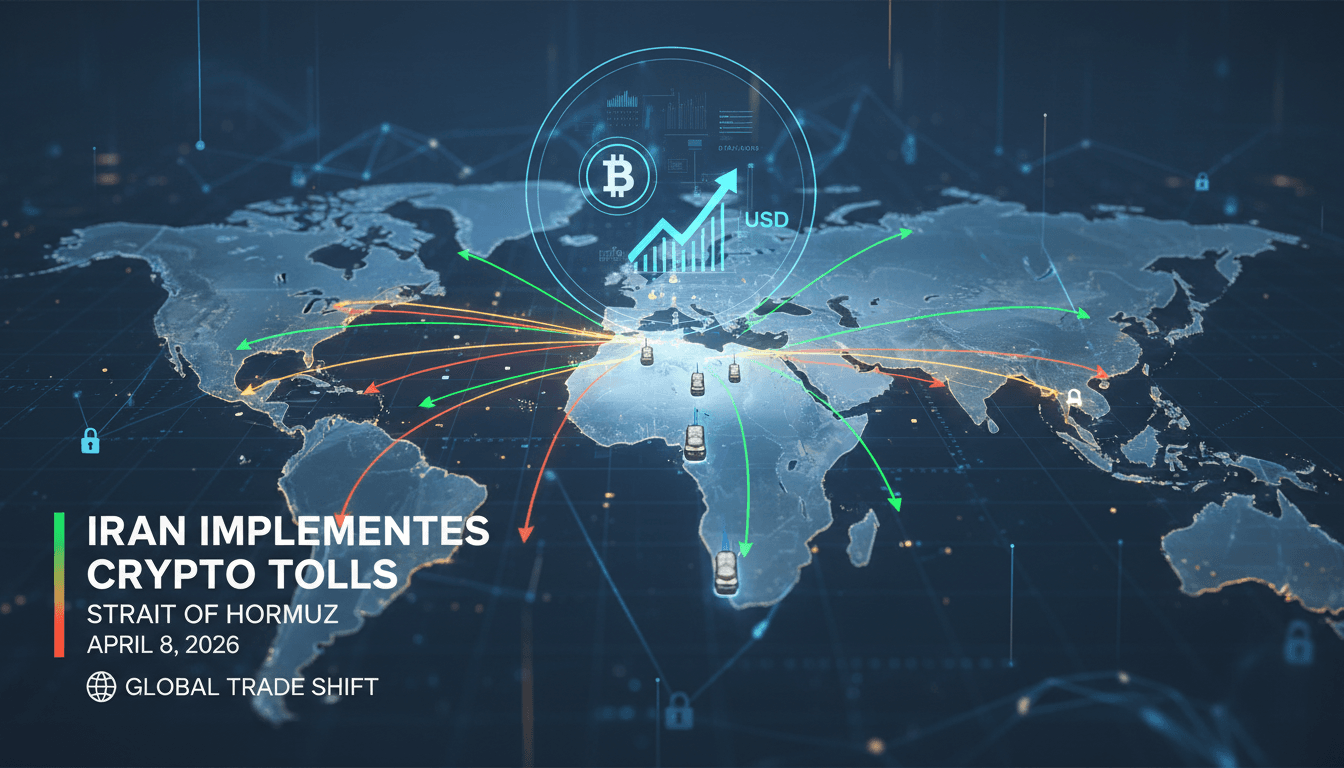
Here's what it means for you.
If you’re involved in global trade or energy markets, the shift to cryptocurrency tolls could reshape transaction dynamics and costs.
Why it matters
This development could signal a significant shift in how countries under sanctions engage in global trade, potentially impacting oil prices and shipping logistics.
What happened (in 30 seconds)
- On April 8, 2026, reports emerged that Iran is demanding cryptocurrency payments for oil tanker transit tolls in the Strait of Hormuz.
- The fee is set at $1 per barrel, payable in Bitcoin or stablecoins, aimed at circumventing U.S. sanctions during a ceasefire.
- The Bitcoin community is analyzing the implications of this move, focusing on payment feasibility and the advantages of using Bitcoin over stablecoins.
The context you actually need
- Iran has been increasingly using cryptocurrency for oil exports since 2024 due to stringent U.S. sanctions limiting access to dollar-based systems like SWIFT.
- The Strait of Hormuz is critical, facilitating 20% of global oil flows, making it a strategic chokepoint for international trade.
- The Islamic Revolutionary Guard Corps (IRGC) has implemented informal vetting and tolls, preferring non-traceable assets to enhance their strategic leverage.
What's really happening
The recent reports about Iran imposing cryptocurrency tolls on oil tankers navigating the Strait of Hormuz represent a calculated move to leverage its geopolitical position while circumventing U.S. sanctions. With the U.S. maintaining strict economic restrictions, Iran has increasingly turned to cryptocurrency as a means of facilitating trade, particularly in oil exports. This shift began in earnest in 2024, as traditional dollar-based systems became less accessible.
The proposed toll of $1 per barrel payable in Bitcoin or stablecoins is not just a financial maneuver; it reflects Iran's broader strategy to monetize its oil exports while reducing reliance on traceable financial systems. The IRGC's involvement in the toll collection process indicates a militarized approach to economic strategy, where control over oil transit routes is used as leverage against international sanctions.
The operational mechanics of this toll system are straightforward. Oil tankers are required to email their cargo manifests to Iranian authorities, who then assess the toll based on the volume of oil being transported. Payments are expected to be made almost instantaneously in cryptocurrency, which allows for a level of anonymity and speed that traditional banking systems cannot match. This method also minimizes the risk of interception or scrutiny by U.S. authorities, as cryptocurrency transactions can be less traceable than conventional financial transfers.
The Bitcoin community has engaged in discussions about the implications of this move, particularly regarding the use of the Lightning Network, which could facilitate faster and cheaper transactions. Analysts like Alex Thorn from Galaxy Digital are closely monitoring blockchain activity to gauge the effectiveness of this toll system. The preference for Bitcoin over stablecoins is rooted in Bitcoin's perceived advantages, such as its resistance to freezing and censorship, which are critical in a sanctions-heavy environment.
As this situation unfolds, the implications extend beyond Iran. The potential for other nations facing similar sanctions to adopt cryptocurrency for trade could reshape global economic dynamics, particularly in energy markets. The Strait of Hormuz, already a focal point for geopolitical tensions, may see increased shipping risks and costs, impacting global oil prices and logistics.
Who feels it first (and how)
- Oil exporters: They may face increased costs and logistical challenges due to new tolls.
- Shipping companies: They will need to adapt to new payment methods and potential delays in vetting processes.
- Consumers in the UAE: Increased oil prices could lead to higher fuel and logistics costs, affecting daily expenses.
- Cryptocurrency traders: Increased interest and activity in Bitcoin as a payment method could influence market dynamics.
What to watch next
- Monitoring blockchain activity: Keep an eye on on-chain data to assess the volume of transactions related to these tolls, which could indicate the system's adoption rate.
- Oil price fluctuations: Watch for any spikes in oil prices that may result from increased shipping costs or geopolitical tensions in the region.
- Responses from other nations: Observe how other countries under sanctions may react or adapt to similar toll systems, potentially influencing global trade practices.
Iran is implementing cryptocurrency tolls for oil tankers in the Strait of Hormuz.
Other nations facing sanctions may consider similar practices to facilitate trade.
The long-term impact on global oil prices and shipping logistics remains to be seen.
Insights by A47 Intelligence
Covers blockchain, cryptocurrency news, project analysis, and market insights.
"Cointelegraph is a leading crypto-focused media outlet known for timely news, analysis, and educational content related to blockchain and digital assets."
— A47 Editor
Bitcoin community weighs in on reports of Iran's crypto toll for oil ships
The Bitcoin community is closely monitoring reports that Iran has implemented a toll system requiring oil tankers to pay fees in Bitcoin for passage through the strategically significant Strait of Hormuz. This decision aligns with a ceasefire agreeme...
Corporate leadership, finance, technology, and market trends.
"Fortune covers financial trends, leadership, and innovation with a pragmatic editorial approach."
— A47 Editor
Iran is demanding tankers in the Strait of Hormuz pay tolls in crypto: What we know so far
Iran has mandated that oil tankers passing through the strategically significant Strait of Hormuz pay tolls in cryptocurrency, a move aimed at circumventing international sanctions and highlighting the regime's increasing reliance on digital assets.
Covers blockchain, cryptocurrency news, project analysis, and market insights.
"Cointelegraph is a leading crypto-focused media outlet known for timely news, analysis, and educational content related to blockchain and digital assets."
— A47 Editor
Crypto Biz: Will Bitcoin secure safe passage through the Hormuz Strait?
Iran has announced a new toll system for oil tankers transiting the strategically vital Strait of Hormuz, requiring payments in Bitcoin. This decision coincides with a ceasefire agreement with the United States, indicating a potential shift in Iran's...
Corporate news, economic trends, and markets with UK and global scope.
"BBC News is widely regarded as reputable and impartial, with a public service mandate."
— A47 Editor
Tankers urged not to pay toll to Iran for use of strait
Tanker firms are being advised against paying tolls to Iran for safe passage through the strategically significant Strait of Hormuz, where Iran has recently implemented a toll system requiring payments in cryptocurrency. This move is seen as an attem...
Social/economic commentary and analysis relevant to business and markets.
"WSJ blends data-driven economic insight with commentary on policy and society."
— A47 Editor
Iran is demanding that oil tankers passing through the Strait of Hormuz pay a toll in cryptocurrency, highlighting its importance to the Iranian regime and economy
Iran has initiated a toll system requiring oil tankers passing through the strategically significant Strait of Hormuz to pay in cryptocurrency, a move that underscores the growing importance of digital currencies in the Iranian economy. This decision...
Global political, business, and cultural coverage from WSJ international desks.
"The Wall Street Journal offers extensive international reporting with a reputation for financial insight and a center-right editorial stance."
— A47 Editor
Iran’s $7.8 Billion Crypto Economy Finds New Way to Grow After Cease-Fire
Iran has initiated a toll system requiring oil tankers passing through the strategically significant Strait of Hormuz to pay in cryptocurrency, a move that underscores the growing importance of digital currencies in the Iranian economy. This decision...