
Federal Reserve Investigates Major Banks' Exposure to Private Credit Amid Financial Stress
Here's what it means for you.
If you're involved in finance or investment, the Federal Reserve's inquiries could signal shifts in lending practices that may affect your access to capital.
Why it matters
The Federal Reserve's oversight of private credit firms is crucial for maintaining financial stability and preventing systemic risks in the broader economy.
What happened (in 30 seconds)
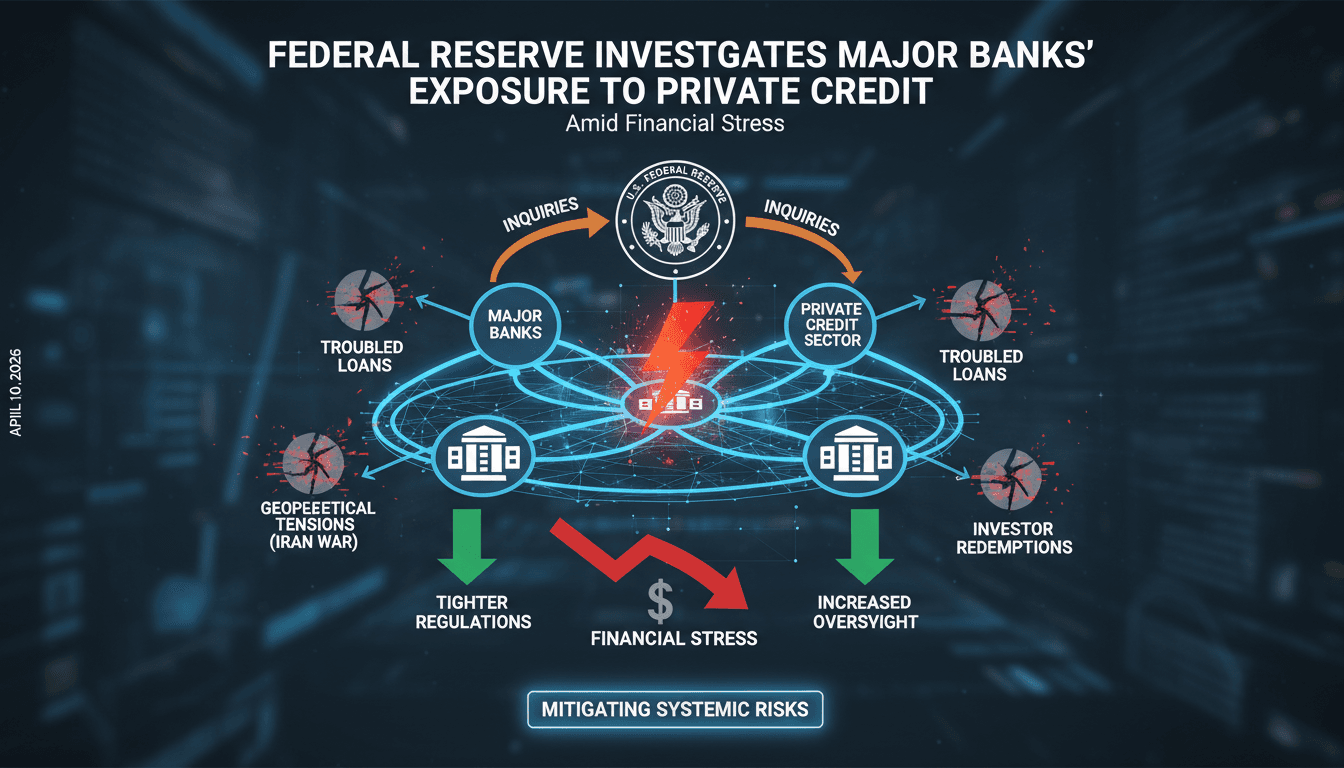
- On April 10, 2026, the U.S. Federal Reserve began querying major banks about their exposures to the $1.8 trillion private credit sector.
- Rising redemptions and troubled loans have prompted the Fed to assess potential spillovers to the financial system.
- The U.S. Treasury Department is also investigating insurers' private credit exposures amid these pressures.
The context you actually need
- Private credit has grown significantly, reaching $1.8 trillion, primarily funded by institutional and retail investors, with insurers playing a key role.
- Regulatory oversight has intensified since the 2008 financial crisis, with recent deregulation allowing for more lending to private credit entities.
- Geopolitical tensions, particularly the Iran war, have compounded stress in the private credit sector, leading to increased defaults and redemption pressures.
What's really happening
The Federal Reserve's recent inquiries into major U.S. banks regarding their private credit exposures are a response to escalating concerns about the stability of the $1.8 trillion private credit industry. This sector, which has expanded rapidly over the past decade, relies on investor capital rather than traditional bank deposits, making it more vulnerable to market fluctuations and investor sentiment.
As of early 2026, the private credit market is experiencing significant stress. Retail funds are facing unprecedented redemption pressures, leading to a surge in withdrawals that threaten the liquidity of these funds. High-profile defaults have raised alarm bells, prompting regulators to take a closer look at the interconnectedness of banks and private credit firms. The Federal Reserve's actions are part of a broader strategy to ensure that any potential risks do not spill over into the banking system, which could have far-reaching implications for the economy.
The backdrop to these inquiries includes a series of regulatory changes and geopolitical events. Following the 2008 financial crisis, U.S. regulators have been vigilant in monitoring the financial system, particularly the interconnections between banks and non-bank entities like private credit firms. However, recent deregulation under the Trump administration has facilitated increased lending to these firms, raising concerns about the adequacy of oversight.
In late March 2026, the Financial Stability Oversight Council convened to review developments in the private credit sector, acknowledging the growing risks associated with high levels of troubled loans and investor redemptions. Fed Chair Jerome Powell emphasized the importance of close monitoring, noting that while the situation is concerning, no systemic risks have been observed thus far.
The situation has been further complicated by external pressures, notably the ongoing Iran war, which has exacerbated market volatility and heightened default risks. As geopolitical tensions rise, the potential for compounded stress in the private credit sector increases, prompting regulators to act preemptively.
The inquiries initiated by the Federal Reserve are not merely routine; they reflect a heightened awareness of the vulnerabilities within the private credit market. By assessing banks' exposures, regulators aim to gauge the potential impact on the broader financial system and ensure that adequate safeguards are in place.
Who feels it first (and how)
- Banks: Major U.S. banks may face tighter lending standards and increased scrutiny from regulators.
- Investors: Institutional and retail investors could experience reduced access to capital as private credit funds impose withdrawal caps.
- Insurance Companies: Insurers with significant private credit exposures may need to reassess their risk management strategies.
- Geopolitical Analysts: Professionals monitoring global conflicts will need to consider how these tensions impact financial markets and investor behavior.
What to watch next
- Redemption trends: Monitoring the rate of investor redemptions from private credit funds will indicate the sector's liquidity and stability.
- Default rates: An increase in default rates among private credit borrowers could signal deeper issues within the sector, prompting further regulatory action.
- Regulatory meetings: Outcomes from upcoming consultations between the U.S. Treasury and insurance regulators will provide insights into the government's approach to managing risks in the private credit market.
The Federal Reserve is actively querying banks about their private credit exposures.
Increased regulatory scrutiny will lead to tighter lending standards in the private credit sector.
The long-term impact of geopolitical tensions on the private credit market remains uncertain.
Insights by A47 Intelligence
Corporate leadership, finance, technology, and market trends.
"Fortune covers financial trends, leadership, and innovation with a pragmatic editorial approach."
— A47 Editor
Fed seeks details on U.S. banks’ exposure to private credit firms
The Federal Reserve is seeking detailed information from major U.S. banks regarding their exposure to private credit firms, driven by a notable increase in fund redemptions and a rise in troubled loans within the sector. This inquiry reflects heighte...
Market-moving headlines impacting equities, bonds, and related risk assets.
"Real-time catalysts and volatility drivers across indices and sectors."
— A47 Editor
Fed asks about US banks’ exposure to private credit firms, Bloomberg reports
The Federal Reserve has requested major U.S. banks to disclose their exposure to private credit firms, following a significant rise in fund redemptions and troubled loans within the sector. This inquiry reflects the Fed's concern about the stability ...
Global markets, investing, and macroeconomics from a premier financial newsroom.
"Bloomberg is respected for in-depth financial reporting and data-driven analysis."
— A47 Editor
Fed Seeks Details on US Banks’ Exposure to Private Credit Firms
The Federal Reserve is requesting major US banks to provide information regarding their exposure to private credit firms, prompted by a notable increase in fund redemptions and a rise in troubled loans within the sector. This inquiry reflects growing...