
Major Pharmaceutical Companies Secure Licensing Deals with Chinese Biotechs
Here's what it means for you.
If you work in healthcare or investment, understanding this shift could reshape your strategies and opportunities in the biotech sector.
Why it matters
This trend signifies a critical shift in global pharmaceutical sourcing, impacting drug development timelines and costs.
What happened (in 30 seconds)
- Pfizer signed a $1.25 billion licensing deal with China's 3SBio for a bispecific cancer antibody, marking a significant investment in Chinese biotech.
- Sanofi invested $30 million in GluBio Therapeutics for innovative treatments targeting sickle-cell disease, reflecting a broader trend of Western firms seeking novel therapies from China.
- In early 2026, 30 additional licensing deals were executed, totaling $1.9 billion, indicating a rapidly expanding market for Chinese biotech innovations.
The context you actually need
- China's biotech landscape has evolved from a generics manufacturer to a leader in innovative drug development, driven by regulatory reforms and significant R&D investments.
- Western drugmakers are facing patent cliffs, prompting them to replenish their pipelines by sourcing cutting-edge therapies from faster-developing markets like China.
- Chinese firms now lead in novel drug trials, with 46% of global new drug trials originating from the country as of early 2025, showcasing their growing influence in the global biotech arena.
What's really happening
The landscape of pharmaceutical development is undergoing a seismic shift as major Western drugmakers increasingly turn to Chinese biotechs for innovative therapies. This pivot is driven by several key factors, including accelerated development timelines, lower costs, and significant advancements in molecular biology.
Historically, China was known primarily for its role as a generics manufacturer, but a series of regulatory reforms and substantial investments in research and development have transformed it into a hub of biotech innovation. Between 2010 and 2022, R&D investments in China grew at an impressive annual rate of 20.7%. This investment has allowed Chinese firms to significantly reduce the time required for clinical trials, often completing them 2-4 months faster than their U.S. counterparts.
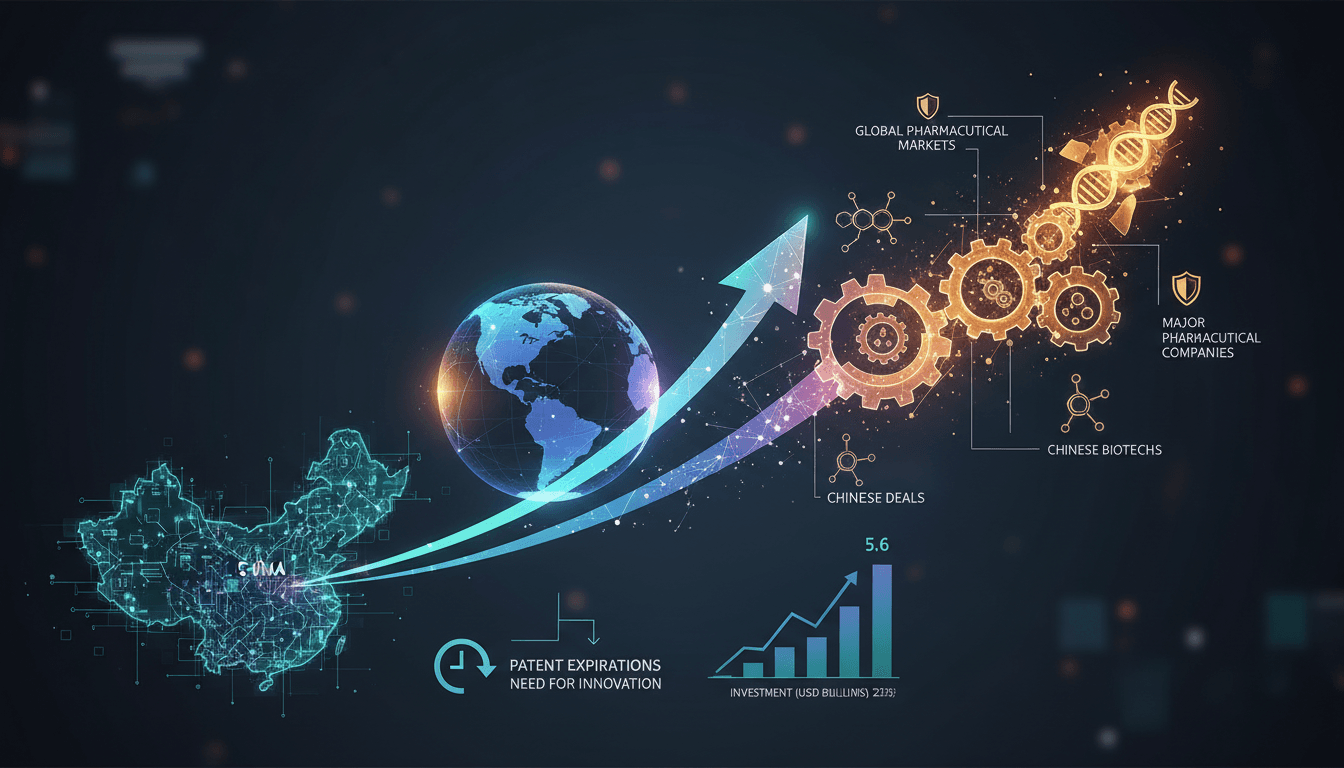
In 2025 alone, Western and Japanese drugmakers executed 70 licensing transactions with Chinese biotechs, committing nearly $5.6 billion upfront. This influx of capital underscores the urgency for these companies to replenish their drug pipelines, especially as they face looming patent expirations on key products. For instance, Pfizer's recent agreement with 3SBio for the bispecific antibody SSGJ-707, currently in Phase 3 trials, exemplifies this trend. The deal, which could yield up to $6 billion in milestone payments, highlights the strategic importance of accessing innovative therapies that can address unmet medical needs.
Moreover, the acceleration of deal-making into 2026, with 30 additional agreements totaling $1.9 billion, indicates that this trend is not a fleeting moment but rather a sustained shift in how pharmaceutical companies approach drug development. Companies like Sanofi are also investing in startups such as GluBio Therapeutics, which is pioneering molecular glue degraders for sickle-cell disease, further demonstrating the diverse range of innovative therapies emerging from China.
Despite ongoing geopolitical tensions, the drive for innovation and cost-effectiveness is compelling Big Pharma to prioritize these partnerships. The surge in Chinese biotech indices, with the Hang Seng Biotech rising 80% in 2025, reflects growing investor confidence in this sector. Pfizer CEO Albert Bourla's comments on China's innovation capabilities further emphasize the urgency and potential of these collaborations.
As Western drugmakers continue to navigate the complexities of global drug development, the strategic partnerships being formed with Chinese biotechs are likely to reshape the landscape of the pharmaceutical industry for years to come.
Who feels it first (and how)
- Pharmaceutical companies: They will benefit from faster access to innovative therapies and reduced R&D costs.
- Biotech startups in China: Increased investment and collaboration opportunities will bolster their growth and innovation capabilities.
- Healthcare professionals: New therapies entering the market could enhance treatment options for patients, particularly in oncology and genetic diseases.
- Investors: Opportunities in biotech investments may shift towards companies engaged in these licensing deals, impacting portfolio strategies.
What to watch next
- Regulatory developments: Keep an eye on any changes in U.S. or Chinese regulations that could affect the flow of investments and partnerships in biotech.
- Market performance of Chinese biotechs: Monitor the stock performance of Chinese biotech firms, as their success could influence global investment trends.
- Emergence of new therapies: Watch for announcements of new drug approvals stemming from these partnerships, which could reshape treatment landscapes in various diseases.
Major pharmaceutical companies are increasingly licensing innovative therapies from Chinese biotechs.
The trend of Western drugmakers investing in Chinese biotech will continue to grow, driven by the need for new therapies and cost efficiencies.
The long-term impact of geopolitical tensions on these partnerships remains uncertain.
Insights by A47 Intelligence
Tech business coverage, major deals, product launches, and Silicon Valley trends.
"WSJ’s tech section offers authoritative reporting on the intersection of technology and business, including exclusive industry analysis."
— A47 Editor
Big Pharma Is Turning to China for the Newest Drug Ideas
Big Pharma is increasingly looking to China for innovative drug ideas, as Chinese biotechs are noted for their speed and lower costs in drug research. This shift suggests a growing reliance on China's capabilities in the pharmaceutical sector.
Public health, medical research, healthcare policy, and pharmaceutical developments.
"Dow Jones is a major financial news provider with a professional tone and broad coverage, including specialized health-sector reporting."
— A47 Editor
Big Pharma Is Turning to China for the Newest Drug Ideas
Big Pharma is increasingly looking to China for innovative drug ideas, as Chinese biotechs demonstrate faster development times and lower costs in drug research. This shift indicates a growing reliance on China's capabilities in the pharmaceutical se...