
Iran Releases Seized Assets of Women's Football Team Captain After Asylum Withdrawal
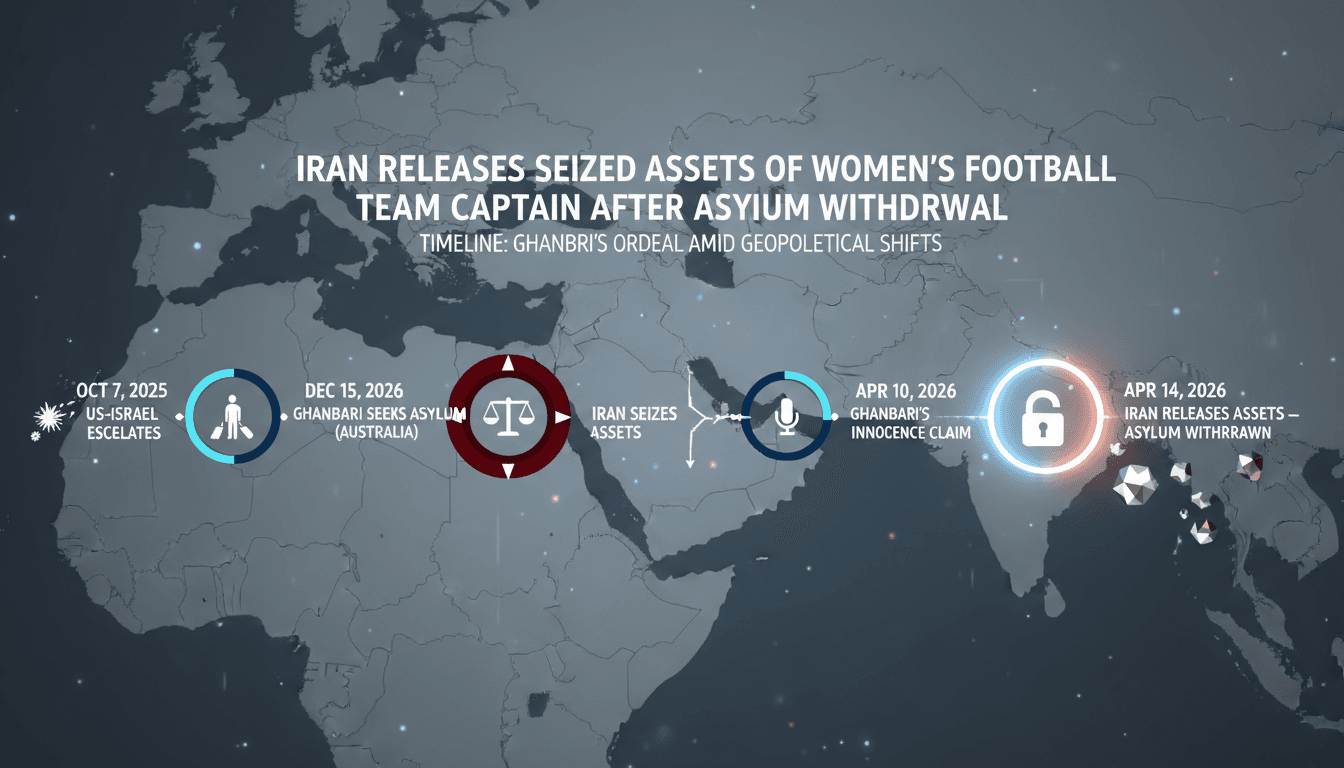
Here's what it means for you.
The release of Zahra Ghanbari's assets signals shifting dynamics in international relations that could affect expatriates and global sports.
Why it matters
This incident highlights the intersection of sports, politics, and human rights, impacting international perceptions of Iran and its athletes.
What happened (in 30 seconds)
- On April 14, 2026, Iranian authorities released the seized assets of Zahra Ghanbari, captain of the women's national football team.
- This followed her withdrawal of an asylum claim in Australia, which she initially sought amid fears of reprisals from the Iranian government.
- The release was framed by the judiciary as a response to her 'declaration of innocence' and 'change in behaviour' after accusations of treason.
The context you actually need
- Protests erupted in Iran in December 2025, leading to increased repression amid the US-Israel conflict that began on February 28, 2026.
- During the AFC Women's Asian Cup, the Iranian team refused to sing the national anthem, resulting in severe backlash from state media and threats against players.
- Seven team members sought asylum in Australia, with Ghanbari being one of five who later returned home under pressure, leading to asset seizures as part of a broader crackdown on perceived traitors.
What's really happening
The release of Zahra Ghanbari's assets is a complex interplay of domestic and international pressures, reflecting the Iranian government's attempts to manage dissent while navigating a fraught geopolitical landscape. The backdrop of the US-Israel conflict has intensified scrutiny on Iranian athletes, particularly women, who are increasingly seen as symbols of resistance against the regime.
Ghanbari's initial asylum claim was a bold move, emblematic of the desperation felt by many Iranians amid escalating violence and repression. The Iranian judiciary's decision to freeze her assets was a calculated response to deter other athletes from following suit, framing them as traitors in a time of national crisis. However, the subsequent release of her assets suggests a strategic pivot by the Iranian authorities, possibly aimed at restoring some semblance of normalcy and loyalty among its athletes.
This incident also underscores the Iranian regime's reliance on public perception and propaganda. By portraying Ghanbari's return and asset release as a vindication of loyalty, the government seeks to quell dissent and reinforce its narrative of patriotism. Yet, this tactic has drawn criticism from human rights groups, who view the asset seizures as coercive measures designed to instill fear among those who might consider defection.
The broader implications extend beyond Iran's borders. The Australian government's handling of the asylum claims has drawn international attention, raising questions about the responsibilities of host nations towards athletes facing persecution. As the situation evolves, the reactions from both Iranian state media and international observers will shape the narrative surrounding Iran's participation in global sports events, including the upcoming FIFA World Cup.
Who feels it first (and how)
- Iranian athletes: Facing increased scrutiny and potential repercussions for their actions and statements.
- Expatriate Iranian community: Experiencing heightened tensions and potential backlash from the Iranian government.
- International sports organizations: Navigating the complexities of athlete participation and human rights concerns in politically sensitive regions.
What to watch next
- Future asylum claims: Monitor how many more athletes seek refuge abroad and the international response to these claims, which could influence Iran's treatment of dissenters.
- Iran's international relations: Watch for shifts in diplomatic ties, particularly with countries like Australia, as they respond to Iran's actions regarding its athletes.
- Public sentiment in Iran: Observe how the Iranian populace reacts to the government's narrative and the treatment of athletes, which could signal broader societal changes.
Ghanbari's assets were released following her withdrawal of the asylum claim.
Increased scrutiny on Iranian athletes and potential repercussions for those who dissent.
The long-term impact on Iran's international sports participation and diplomatic relations.
This article was generated by AI from 3 verified sources and reviewed by A47 editorial systems.
Covers global sporting events, athlete news, and cultural perspectives on sports.
"The Guardian is known for progressive editorial analysis, often exploring social and cultural dimensions of sports."
— A47 Editor
Iran releases assets of women’s football team captain in Australia asylum drama
Iran's judiciary announced the release of assets belonging to Zahra Ghanbari, captain of the Iranian women's football team, after they were frozen due to her asylum claim in Australia, which she later withdrew. This decision follows her change in beh...
Pan-Arab news coverage spanning politics, business, sports, and regional affairs.
"Asharq Al-Awsat reflects a broad Arab editorial perspective with strong attention to regional geopolitics."
— A47 Editor
إيران تُعيد أصول قائدة منتخب كرة القدم بعد أزمة طلب اللجوء في أستراليا
Iranian authorities have returned the financial assets of Zahra Ghanbari, the captain of the women's national football team, which were confiscated after she applied for asylum in Australia. This decision was announced by the Iranian judiciary on Mon...
Regional coverage and analysis focused on politics, diplomacy, and business across the Middle East.
"Al-Monitor is known for analytical reporting on Middle East politics and policy developments."
— A47 Editor
Iran releases assets of football captain in Australia asylum row
Iran's judiciary announced the release of assets belonging to Zahra Ghanbari, the captain of the Iranian women's football team, which had been seized following her asylum claim in Australia last month. Ghanbari was part of a group of players who soug...