
Goldman Sachs Raises Oil Price Forecasts Amid Strait of Hormuz Disruptions
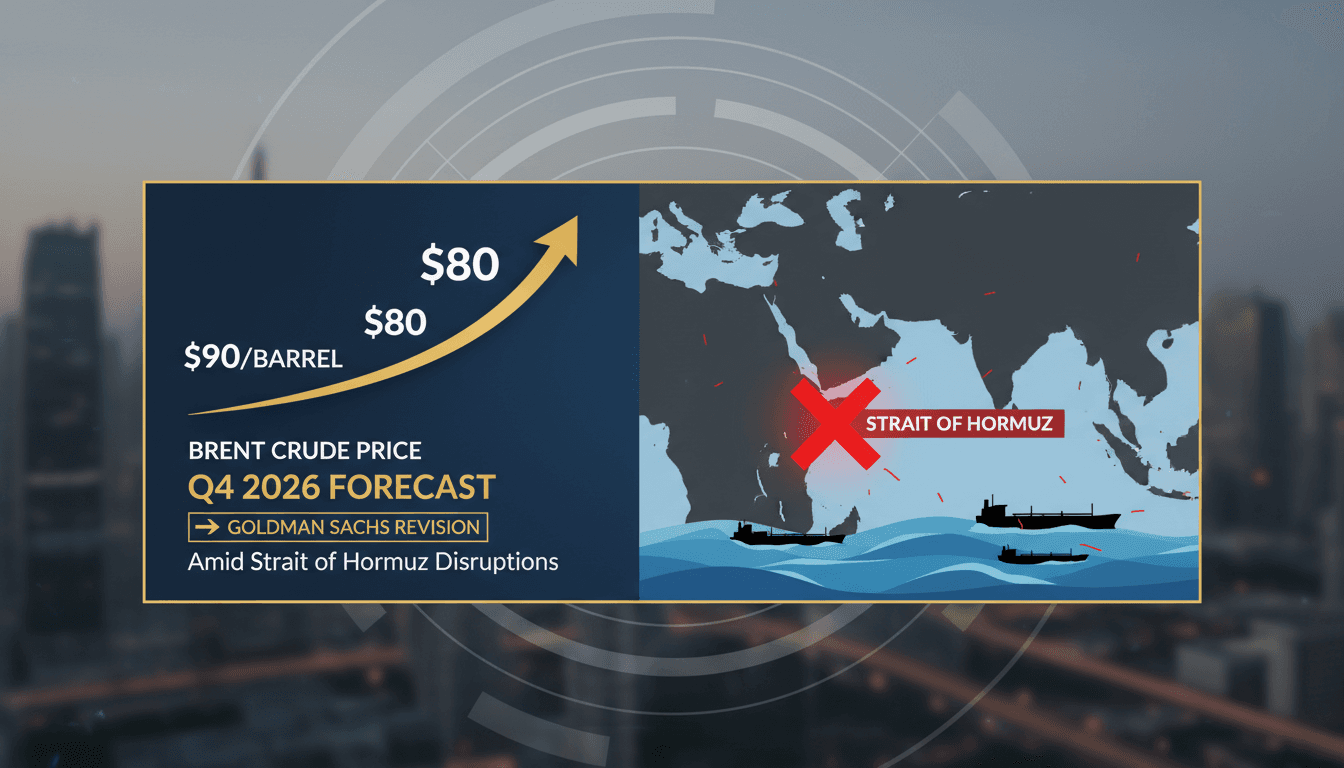
Here's what it means for you.
The ongoing disruptions in the Strait of Hormuz are likely to keep oil prices elevated, impacting global markets.
What happened
Goldman Sachs raised its oil forecasts as the Strait of Hormuz remains closed, impacting global oil supply.
The Context
- Goldman Sachs expects Gulf exports to normalize by the end of June 2026, later than previously forecasted.
- The firm does not foresee a global recession unless the Strait remains closed in a severely adverse scenario.
- The ongoing disruptions are contributing to elevated oil prices.
Takeaway
The situation in the Strait of Hormuz will continue to influence global oil prices and market stability.
Insights by A47 Intelligence
Global markets, investing, and macroeconomics from a premier financial newsroom.
"Bloomberg is respected for in-depth financial reporting and data-driven analysis."
— A47 Editor
Goldman Hikes Oil Forecasts Again as Hormuz Shock Builds
Goldman Sachs has revised its oil price forecasts, projecting Brent crude to reach $90 per barrel by the fourth quarter of 2026, driven by reduced production in the Persian Gulf and ongoing disruptions in the Strait of Hormuz. The firm now anticipate...
Global business headlines with AI angles.
"General business outlet that frequently covers AI."
— A47 Editor
Goldman Sachs Raises Oil Forecasts For 2026 As Strait Of Hormuz Remains Closed
Goldman Sachs has raised its oil price forecasts for 2026 as the Strait of Hormuz remains closed, contributing to sustained elevated prices in the oil market. This closure is a result of ongoing geopolitical tensions, particularly between the U.S. an...
Oil, metals, and agriculture: supply/demand headlines, OPEC chatter, inventories, and price action.
"Solid tape for energy and metals traders tracking macro and micro catalysts."
— A47 Editor
Goldman raises oil forecasts as Gulf supply shock seen lasting longer
Goldman Sachs has raised its oil price forecasts, anticipating that the supply shock in the Gulf region will persist longer than previously expected. This adjustment reflects ongoing geopolitical tensions and significant disruptions in oil production...