
US Reviews Military Presence in Germany Amid Iran War Dispute with Chancellor Merz
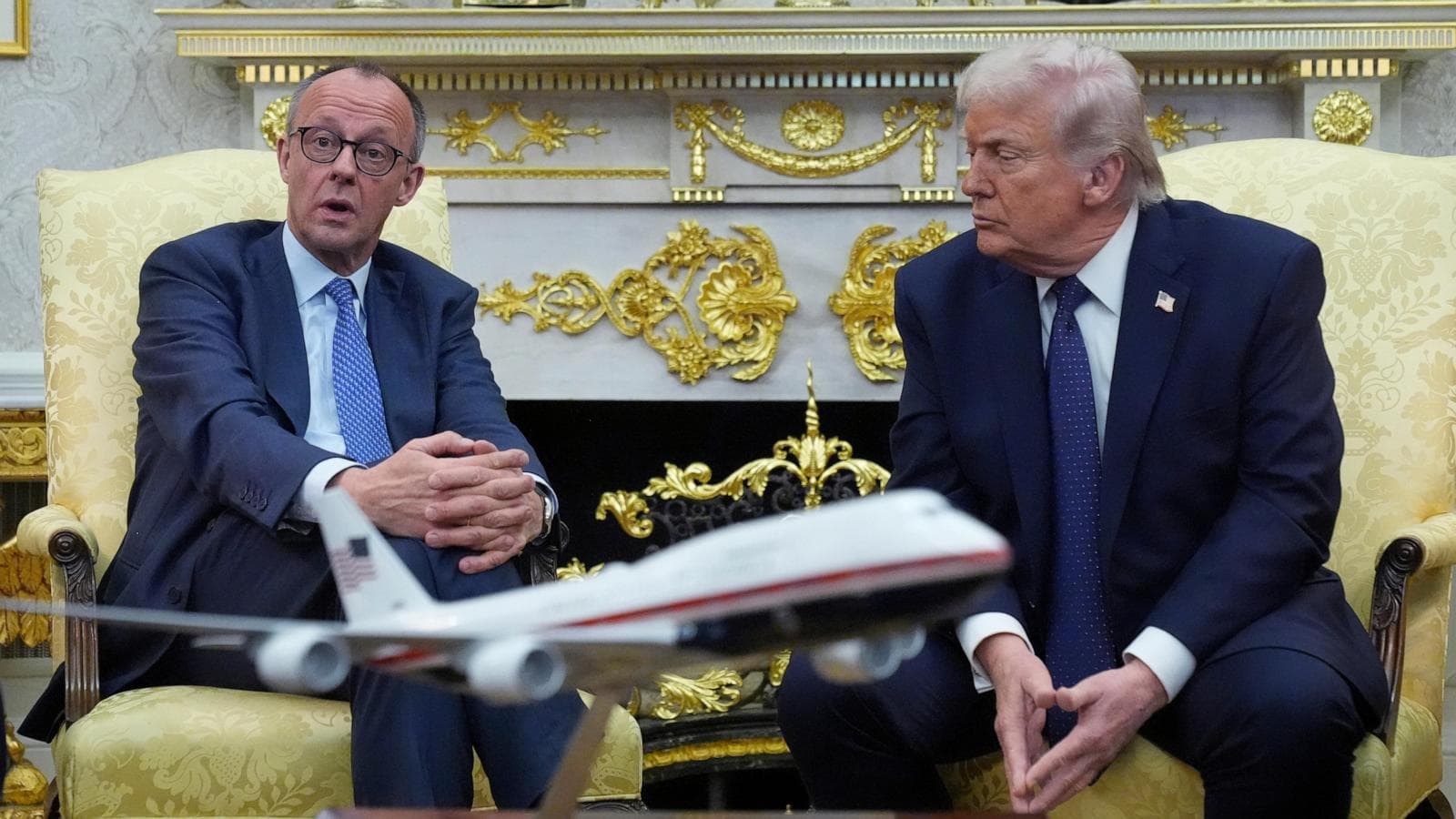
Here's what it means for you.
If you’re in Europe or rely on transatlantic relations, this military policy review could reshape security dynamics and economic stability.
Why it matters
The potential reduction of U.S. troops in Germany could destabilize NATO and impact European security, affecting global markets and energy supplies.
What happened (in 30 seconds)
- On April 29, 2026, President Trump announced a review of U.S. troop presence in Germany amid tensions with Chancellor Merz over the Iran war.
- Chancellor Merz criticized U.S. strategy, calling it directionless and leading to American 'humiliation' in the conflict with Iran.
- The U.S. has approximately 35,000 troops stationed in Germany, a figure that could change depending on the outcome of the review.
The context you actually need
- The U.S.-Israel war against Iran began on February 28, 2026, with significant military action that has led to economic repercussions, particularly in Europe.
- Germany's economic vulnerabilities have been highlighted, especially with energy shortages due to Iran's closure of the Strait of Hormuz, affecting oil transit.
- NATO's cohesion is at risk, as European allies are hesitant to engage in the conflict, prompting U.S. criticism of their defense spending and commitment.
What's really happening
The announcement of a potential reduction in U.S. troops stationed in Germany is not merely a military policy review; it reflects deeper geopolitical tensions and strategic recalibrations. The backdrop of the ongoing U.S.-Israel war against Iran, which began with extensive airstrikes, has created a complex environment where military presence is intertwined with diplomatic relations.
Chancellor Friedrich Merz's criticism of U.S. strategy highlights a growing rift between Germany and the U.S. regarding how to handle Iran's nuclear ambitions and the broader implications for European security. Merz's remarks about American 'humiliation' suggest a perception that the U.S. is losing its strategic footing in the region, which could embolden adversaries and destabilize alliances.
Trump's linkage of troop reductions to Germany's economic weaknesses and its alleged tolerance of Iran's nuclear program indicates a shift towards a more transactional approach to international relations. This mirrors past U.S. policies aimed at adjusting NATO burden-sharing, where the U.S. expects European allies to contribute more significantly to their own defense. The potential troop reduction could serve as leverage in negotiations over defense spending and military commitments.
The implications of this review extend beyond military strategy; they touch on economic stability in Europe. The closure of the Strait of Hormuz has already led to soaring oil prices, with benchmarks like Brent crude exceeding $106 per barrel. This situation is exacerbated by the energy shortages faced by European nations, which rely heavily on oil imports. The economic fallout from these developments could lead to increased inflation and reduced consumer spending, impacting various sectors.
Moreover, the reaction from European leaders indicates a concern for NATO's unity. As the U.S. considers its military footprint, the potential for a fragmented alliance could embolden adversaries and create a power vacuum in Europe. This scenario raises questions about the future of transatlantic relations and the collective security framework that has underpinned European stability since World War II.
Who feels it first (and how)
- European governments: They may face increased pressure to bolster their defense budgets and capabilities.
- Energy sectors: Companies reliant on stable oil prices will experience volatility, impacting profitability and investment.
- Consumers: Rising energy costs could lead to higher prices for goods and services, affecting household budgets.
- Military personnel and families: Changes in troop levels could disrupt lives and careers, leading to uncertainty for those stationed abroad.
What to watch next
- Troop review outcomes: The timeline for Trump's decision on troop levels will be crucial for NATO's future and European security.
- Energy market fluctuations: Watch for changes in oil prices as the situation in the Strait of Hormuz evolves, impacting global markets.
- European defense spending: Increased commitments from European nations could signal a shift in NATO dynamics and collective security strategies.
The U.S. has approximately 35,000 troops in Germany, and a review is underway.
European nations will feel pressure to increase defense spending in response to U.S. troop reductions.
The long-term implications for NATO cohesion and U.S.-European relations remain uncertain.
This article was generated by AI from 6 verified sources and reviewed by A47 editorial systems.
Editor-curated FT homepage stories spanning markets, business, world, and opinion.
"The Financial Times is a globally respected business publication with a centrist/center-left tone and strong markets focus."
— A47 Editor
Trump launches review of US troops in Germany
President Donald Trump has initiated a review of the U.S. troop presence in Germany, a move that follows German Chancellor Friedrich Merz's sharp criticism of U.S. strategies regarding Iran, which he described as a humiliation for the country amid st...
International stories from NPR’s global desk.
"NPR is an American public media organization known for thoughtful reporting and a slightly left-leaning editorial tone."
— A47 Editor
Trump says he is weighing reducing American troop presence in Germany after Iran feud
President Trump has indicated that he is considering a reduction of the U.S. military presence in Germany amid ongoing tensions with German Chancellor Friedrich Merz, who has criticized the U.S. for its handling of the conflict with Iran. This potent...
Major U.S. developments and regional news.
"ABC News delivers broad national coverage with a mainstream editorial stance, focusing on accessibility and balanced reporting."
— A47 Editor
Trump says he is weighing reducing American troop presence in Germany after Iran feud
President Donald Trump has indicated that he is considering a reduction of the U.S. military presence in Germany, a move that arises amid rising tensions with German Chancellor Friedrich Merz over the ongoing conflict in Iran. This potential troop re...
RT is a Russian state-funded network covering global events from a Russian perspective.
"RT is widely criticized for promoting pro-Kremlin narratives and is considered by many to be a state propaganda outlet."
— A47 Editor
Trump threatens to pull troops from Germany amid feud with Merz
U.S. President Donald Trump has announced that he is considering reducing the number of American troops stationed in Germany, a decision stemming from escalating tensions with German Chancellor Friedrich Merz, who criticized the U.S. for its handling...
News from the United States including domestic politics, society, and culture.
"Sky News is often seen as a center-right outlet in the UK, known for its rolling news coverage and emphasis on breaking stories and political affairs."
— A47 Editor
Trump threatens to withdraw troops from Germany
President Donald Trump has threatened to withdraw U.S. troops from Germany following remarks by German Chancellor Friedrich Merz, who stated that the U.S. is being 'humiliated' by Iran during ongoing negotiations. This threat comes amid rising tensio...
International news, politics, and culture.
"Sky News is a UK-based 24-hour channel known for fast-breaking news and political coverage."
— A47 Editor
Trump threatens to withdraw troops from Germany
President Donald Trump has threatened to withdraw U.S. troops from Germany following remarks by German Chancellor Friedrich Merz, who stated that the U.S. is being 'humiliated' by Iran during ongoing negotiations. This threat comes amid rising tensio...
U.S. political news and right-leaning commentary.
"Fox News is a highly influential conservative news outlet known for right-leaning political commentary and coverage."
— A47 Editor
Trump weighs pulling US troops from Germany amid clash with chancellor over Iran war
President Donald Trump is considering a reduction of U.S. troops stationed in Germany, a move that comes amid escalating tensions with German Chancellor Friedrich Merz over the ongoing conflict in Iran. Trump's criticism of Merz's comments regarding ...