
Gold Prices Steady at $4,715 Amid US-Iran Ceasefire and Inflation Data Awaited
Here's what it means for you.
If you’re invested in commodities or global markets, the recent stabilization of gold prices amid geopolitical tensions could impact your portfolio.
Why it matters
The interplay between geopolitical events and commodity prices can significantly influence global market stability and investment strategies.
What happened (in 30 seconds)
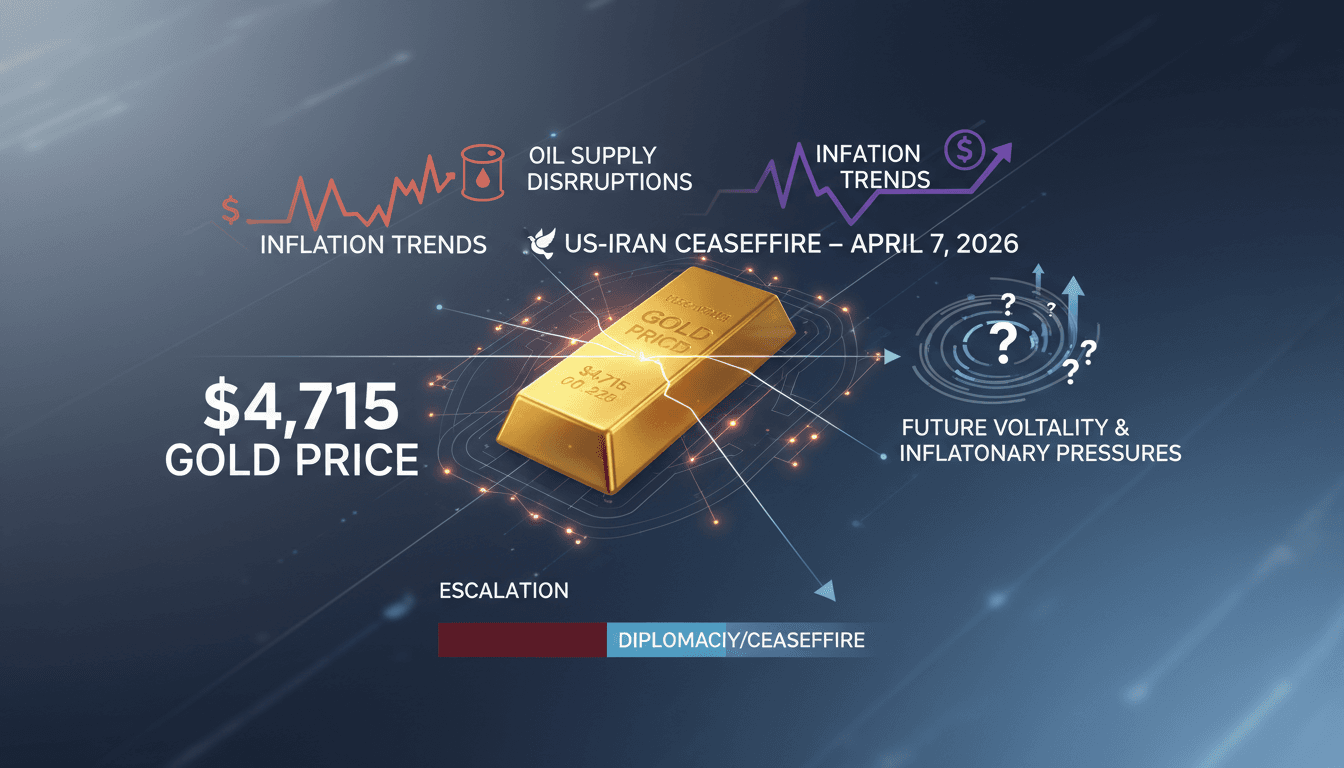
- Gold prices held steady at approximately $4,715 per ounce on April 9, 2026, as investors reacted to a fragile ceasefire between the US and Iran.
- The ceasefire was announced by President Trump on April 7, following a military conflict that disrupted oil supplies and heightened inflation fears.
- Market reactions varied globally, with Wall Street rallying while Asian indices showed declines due to skepticism about the ceasefire's longevity.
The context you actually need
- The US-Israeli military campaign against Iran began on February 28, 2026, closing the Strait of Hormuz and disrupting 20% of global oil shipments.
- Inflation pressures surged as Brent crude oil prices exceeded $97 per barrel, diminishing gold's appeal as a safe haven and leading to a greater than 10% price decline since the war's onset.
- The fragile ceasefire is contingent on ongoing negotiations in Islamabad, with both US and Iranian compliance crucial for long-term stability.
What's really happening
The recent stabilization of gold prices at around $4,715 per ounce is a direct response to the geopolitical landscape shaped by the US-Iran conflict and its implications for global markets. The military campaign initiated on February 28, 2026, led to a significant disruption in oil supplies, particularly through the Strait of Hormuz, which is critical for global energy distribution. This closure not only caused oil prices to spike but also intensified inflationary pressures worldwide, leading to a decline in gold prices as investors reassessed their risk appetite.
As the conflict escalated, the Federal Reserve's expectations for interest rate cuts diminished, further eroding gold's allure as a safe-haven asset. The announcement of a two-week ceasefire by President Trump on April 7 provided a temporary reprieve, allowing gold prices to stabilize. However, the market remains cautious, with mixed reactions evident in global indices. Wall Street experienced a rally on April 8, reflecting optimism about the ceasefire, while Asian markets declined due to skepticism regarding its durability.
The ongoing negotiations in Islamabad are pivotal; they will determine whether the ceasefire can transition into a more permanent resolution. The stakes are high, as the outcome will influence not only regional stability but also global economic conditions. Analysts are closely monitoring the situation, with expectations that gold prices may consolidate within a range of $4,607 to $4,860, depending on the developments in US inflation data and the geopolitical landscape.
Investors are advised to remain vigilant, as the interplay between military actions, oil supply disruptions, and inflation data will continue to shape market dynamics. The current environment underscores the importance of understanding how geopolitical events can ripple through financial markets, affecting everything from commodity prices to stock indices.
Who feels it first (and how)
- Commodity traders: Fluctuations in gold prices directly impact trading strategies and profit margins.
- Investors in energy sectors: Rising oil prices can affect stock valuations and investment decisions.
- Global consumers: Increased inflation may lead to higher costs of living, impacting purchasing power.
- Middle Eastern economies: Countries like the UAE and Saudi Arabia, reliant on oil exports, may face economic slowdowns due to disrupted supplies.
What to watch next
- US inflation data: Scheduled for release on April 9, this data will provide insights into the economic impact of the conflict and influence Federal Reserve policy.
- Ceasefire negotiations: The outcome of talks in Islamabad will determine the future stability of the region and its economic implications.
- Gold price fluctuations: Continued monitoring of gold prices will indicate investor sentiment regarding geopolitical risks and inflationary pressures.
Gold prices have stabilized at approximately $4,715 per ounce amid geopolitical tensions.
Continued volatility in global markets as investors react to inflation data and ceasefire developments.
The long-term durability of the ceasefire and its impact on regional stability and commodity prices.
This article was generated by AI from 3 verified sources and reviewed by A47 editorial systems.
Markets desk coverage, trading insights, and investor updates.
"WSJ’s markets reporting provides in-depth analysis and context for investors."
— A47 Editor
Precious Metals Post Stronger Day Amid Middle East Tensions
Precious metals futures experienced a notable increase amid ongoing tensions in the Middle East, particularly affecting traffic in the Strait of Hormuz. Despite the geopolitical uncertainties, precious metals like gold and silver showed resilience, w...
Regional and international reporting focused on Middle Eastern politics, diplomacy, and economics.
"Asharq Al-Awsat is a Saudi-owned international newspaper reflecting mainstream Gulf political perspectives."
— A47 Editor
Gold Steady as Investors Eye US-Iran Ceasefire, Brace for Inflation Data
Gold prices have remained steady as investors closely monitor the fragile ceasefire between the United States and Iran, which was established to ease military tensions. However, recent developments, including the failure of peace talks that lasted 21...
Business, markets, economy, and corporate news with strong UAE and regional relevance.
"Emirates 24|7 business coverage tends to center UAE markets, property, regulation, and regional economic developments."
— A47 Editor
Gold steady as markets watch US–Iran ceasefire and await key inflation data Gold steady as markets watch US–Iran ceasefire and await key inflation data
Gold prices remained steady as investors monitored the fragile ceasefire between the U.S. and Iran, with spot gold inching up 0.1% to $4,721.51 per ounce. The market is also awaiting a crucial U.S. inflation report that could influence interest rate ...