
Libya Signs First Unified National Budget in Over a Decade with International Support
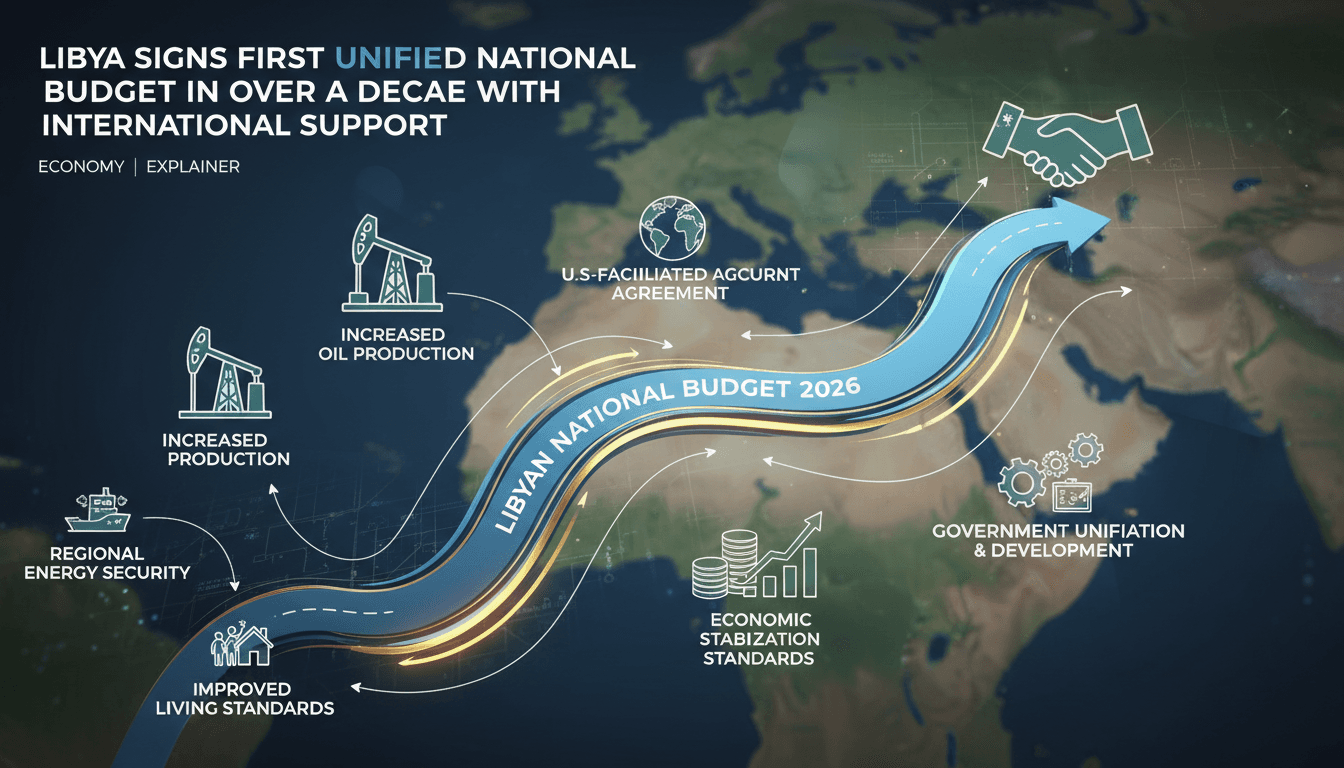
Here's what it means for you.
If you’re involved in the Middle East energy market or have ties to Libya, this budget agreement could stabilize oil prices and enhance investment opportunities.
Why it matters
This agreement represents a significant step toward economic coordination in a region long plagued by political fragmentation.
What happened (in 30 seconds)
- Libya signed its first unified national budget in over 13 years on April 11, 2026, totaling 190 billion Libyan dinars ($29.95 billion USD).
- Ten nations, including Saudi Arabia and the U.S., endorsed the budget, highlighting its potential for financial stability and increased oil production.
- The budget aims to enhance resource distribution and bolster the National Oil Corporation's operational capacity amid ongoing political divisions.
The context you actually need
- Libya has faced political and financial fragmentation since the 2014 civil war, leading to rival administrations and economic instability.
- The unified budget follows months of U.S.-facilitated negotiations, marking a rare consensus between the eastern and western factions of the country.
- The agreement includes provisions for the National Oil Corporation, which is crucial for Libya's economy, as oil exports are a primary revenue source.
What's really happening
The signing of Libya's first unified national budget since 2013 is a landmark event in a country that has been divided politically and economically for over a decade. The budget, valued at 190 billion LYD (approximately $29.95 billion USD), was agreed upon by representatives from both the eastern House of Representatives and the western High Council of State. This agreement is not just a financial document; it symbolizes a potential turning point in Libya's ongoing struggle for unity and stability.
The budget's approval comes after extensive negotiations facilitated by the United States, showcasing the international community's interest in stabilizing Libya. The joint statement from ten nations, including Saudi Arabia, the U.S., and several European and Middle Eastern countries, emphasizes the budget's role in enhancing financial stability, preserving the value of the Libyan dinar, and increasing oil production. This endorsement is crucial as it reflects a collective acknowledgment of Libya's potential to recover economically, provided that the budget is implemented effectively.
The operational budget for the National Oil Corporation is particularly significant. Libya's economy is heavily reliant on oil exports, which account for a substantial portion of its GDP. By ensuring that the National Oil Corporation has the necessary funding to boost production, the budget aims to stabilize the economy and potentially increase the value of the dinar. This could lead to improved purchasing power for Libyans and a more favorable environment for foreign investment.
However, the path to implementation is fraught with challenges. The political landscape remains divided, and the success of this budget will depend on the cooperation of both legislative bodies. Analysts are cautiously optimistic, noting that while immediate market shifts have not been observed, there is potential for the dinar to appreciate and for oil production to grow if the budget is fully realized.
In the broader context, the agreement could also have implications for regional energy security. As Libya stabilizes its oil production, neighboring countries, including those in the Gulf, may benefit from increased energy exports and trade opportunities. This interconnectedness highlights the importance of Libya's economic recovery not just for its citizens, but for the entire region.
Who feels it first (and how)
- Libyan citizens: Potential for improved economic conditions and purchasing power if the budget is implemented effectively.
- Investors in the energy sector: Increased oil production could lead to more investment opportunities and stable prices.
- Expatriates in the UAE: The Libyan community, over 100,000 strong, may see remittances increase as the dinar stabilizes.
What to watch next
- Implementation of the budget: Monitoring how quickly and effectively the budget is put into action will be crucial for economic stability.
- Oil production levels: Increases in production will be a key indicator of Libya's economic recovery and could influence global oil prices.
- Political developments: Any shifts in the political landscape could impact the budget's success and overall economic stability.
The budget has been signed and endorsed by multiple nations.
Increased oil production and potential appreciation of the dinar if the budget is implemented successfully.
The extent to which political divisions will affect the budget's execution and Libya's overall economic recovery.
Insights by A47 Intelligence
Pan-Arab news coverage spanning politics, business, sports, and regional affairs.
"Asharq Al-Awsat reflects a broad Arab editorial perspective with strong attention to regional geopolitics."
— A47 Editor
السعودية ودول عدة ترحب بتوقيع ليبيا أول ميزانية وطنية
Saudi Arabia, Egypt, France, Germany, Italy, Qatar, Turkey, the UAE, Britain, and the United States welcomed the signing of a unified national budget for Libya in a joint statement on Sunday. This marks a significant step towards financial stability ...
Arabic-language coverage of Saudi, regional, and international affairs.
"Al Bilad offers mainstream Saudi newspaper coverage across domestic and broader Arab topics."
— A47 Editor
المملكة وعدة دول ترحب بتوقيع أول ميزانية وطنية موحّدة لليبيا منذ سنوات
Several countries, including Saudi Arabia, Egypt, France, Germany, Italy, Qatar, Turkey, the UAE, the UK, and the USA, welcomed the signing of Libya's first unified national budget in over a decade on April 11, 2026. This budget represents a signific...
Arabic-language coverage of international news and geopolitics.
"RT Arabic is a Russian state-funded outlet often criticized for promoting Kremlin-aligned narratives."
— A47 Editor
بيان مشترك يرحب بتوقيع ميزانية موحدة في ليبيا منذ 13 عاما
The U.S. State Department issued a joint statement on Saturday, welcoming the signing of a unified budget for Libya for the year 2026, marking the first such agreement in 13 years. This collaborative effort involves various Arab and European nations ...