
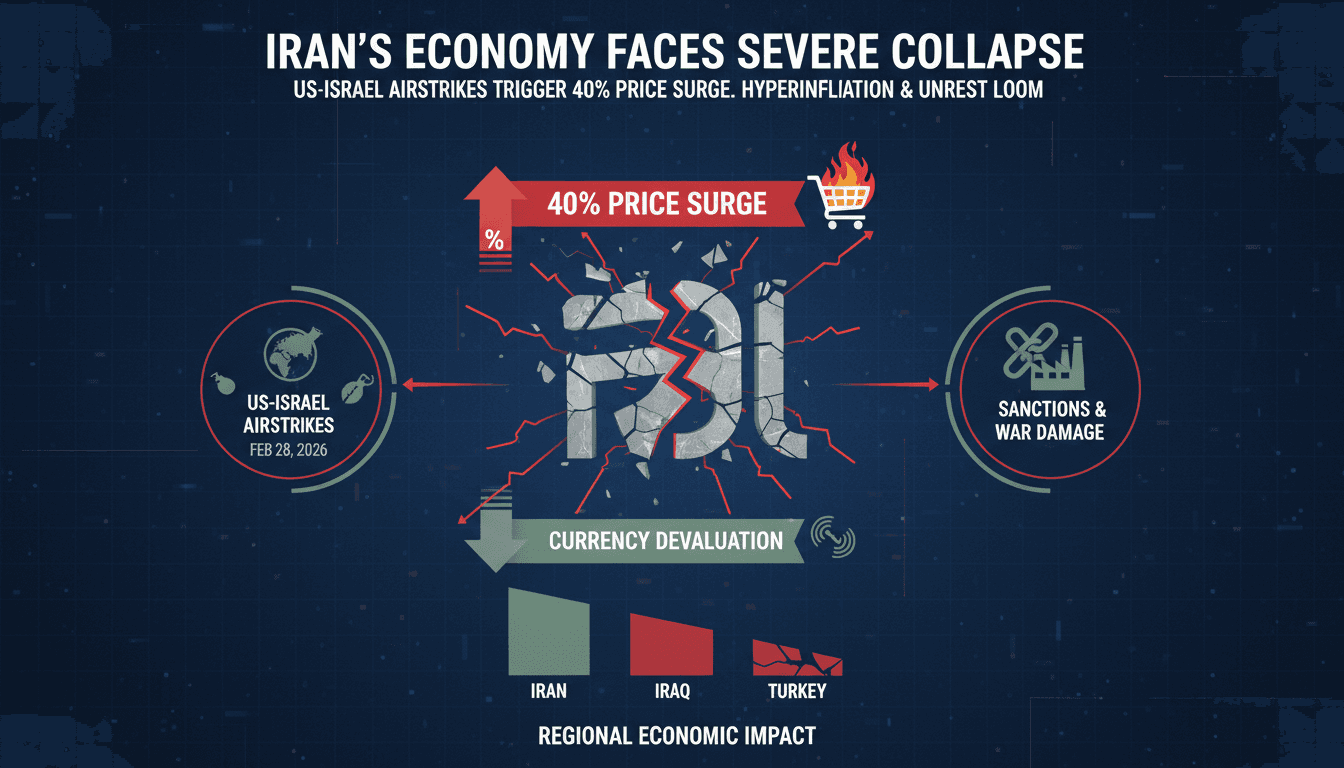
Iran's economy faces severe collapse following US-Israel airstrikes
Why it matters
The economic turmoil in Iran is poised to disrupt supply chains and elevate costs in neighboring regions, affecting global markets.
What happened (in 30 seconds)
- On February 28, 2026, the US and Israel launched airstrikes against Iran, igniting a new phase of conflict.
- Prices surged by approximately 40% within six weeks, exacerbating an already dire economic situation marked by hyperinflation and currency devaluation.
- Iran's central bank reported an 8% decline in the rial's value on black markets, leading to widespread payroll delays and rising unemployment.
The context you actually need
- Chronic sanctions had already weakened Iran's economy, with inflation hitting 47.5% before the war began.
- Food inflation reached 105% by February 2026, reflecting severe supply chain disruptions and rising living costs.
- Failed ceasefire negotiations over the April 11-12 weekend eliminated hopes for sanctions relief, further destabilizing the economy.
What's really happening
The recent airstrikes by the US and Israel have intensified an already precarious economic situation in Iran, where hyperinflation and currency devaluation were already rampant due to long-standing sanctions. The Iranian rial, which had already lost 60% of its value following a brief conflict with Israel in June 2025, has continued to plummet, with reports indicating an 8% drop on black markets since the onset of the war. This currency instability has led to a dramatic surge in prices, with residents reporting an increase of approximately 40% in just six weeks.
The Iranian regime is now grappling with severe payroll shortfalls, as government officials express concerns about meeting salary obligations without relief from sanctions. The destruction of critical infrastructure—factories, energy facilities, and transport networks—has exacerbated unemployment, which is expected to rise sharply as the war continues. The central bank's issuance of larger currency denominations is a desperate attempt to manage the crisis, but it reflects a deeper structural failure within the economy.
The regime's reliance on oil exports has been strained, and the ongoing conflict has further jeopardized this critical revenue stream. Mass protests that erupted in late 2025 over living costs were suppressed, but the underlying grievances remain, and the potential for renewed unrest is high as the economic situation deteriorates. The Iranian government has yet to announce any official payroll cuts, but insiders suggest that fears of civil unrest are mounting.
As the situation unfolds, the impact of the war extends beyond Iran's borders. Neighboring countries, particularly those reliant on oil exports, are bracing for economic fallout. A UN study projects that Arab nations could collectively lose up to $260 billion due to the conflict, with oil prices already nearing $80 per barrel amid supply fears. For Dubai residents, this translates to elevated fuel and shipping costs, as disruptions in the Strait of Hormuz threaten regional stability.
Who feels it first (and how)
- Iranian workers: Facing delayed payrolls and rising unemployment.
- Oil-dependent economies: Countries like the UAE may experience increased costs and reduced revenues.
- Consumers in the Middle East: Higher prices for goods and services due to disrupted supply chains.
What to watch next
- Inflation rates in Iran: Continued monitoring of inflation will indicate the severity of the economic crisis and its potential spillover effects.
- Oil prices: Fluctuations in oil prices will signal how the conflict impacts global markets and regional economies.
- Protests in Iran: Renewed civil unrest could destabilize the regime further, affecting regional security dynamics.
Hyperinflation in Iran exceeds 47%, and the rial has devalued significantly since the war began.
Unemployment will rise sharply as the war continues and infrastructure damage mounts.
The potential for sanctions relief or a ceasefire remains uncertain, impacting future economic stability.
This article was generated by AI from 2 verified sources and reviewed by A47 editorial systems.
Corporate leadership, finance, technology, and market trends.
"Fortune covers financial trends, leadership, and innovation with a pragmatic editorial approach."
— A47 Editor
Iran’s crumbling economy is the regime’s greatest weakness with prices up 40% since the war began while authorities worry about making payroll
Iran's economy is facing severe challenges, with a reported 40% increase in prices since the onset of the war, leading officials to warn of impending disaster if sanctions are not lifted. The financial strain is evident as authorities express concern...
Capitol Hill news, legislation, and policy insight.
"The Hill specializes in U.S. politics and policy, with a focus on Capitol Hill developments and a reputation for insider reporting."
— A47 Editor
'Warflation' will hit more than just gas prices
The ongoing conflict in Iran continues to impact the U.S. economy, with inflation rising to 3.3% in March, the highest increase in nearly four years, primarily driven by escalating energy costs linked to the war. This inflation spike reflects the bro...