
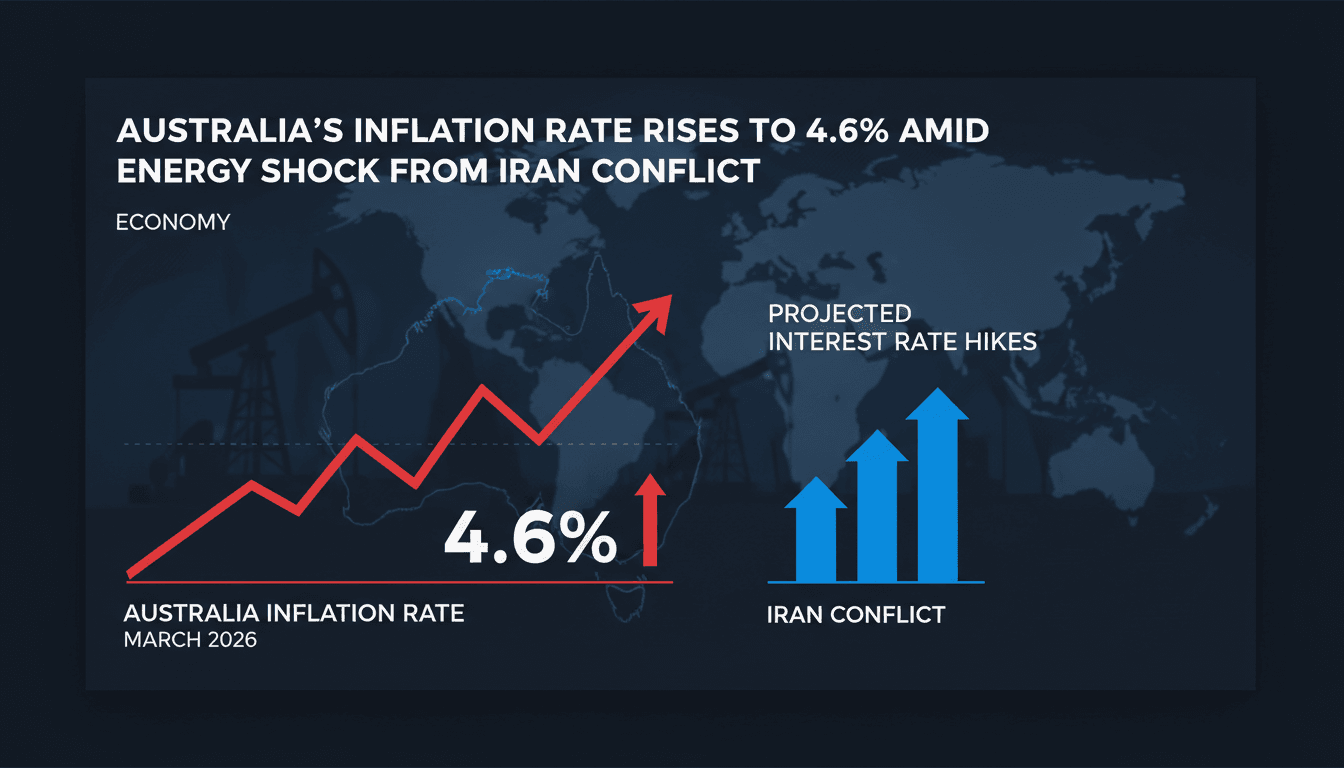
Australia's inflation rate rises to 4.6% amid energy shock from Iran conflict
Here's what it means for you.
Rising inflation in Australia may impact global markets and economic stability.
What happened
Inflation in Australia increased to 4.6% in March 2026, influenced by rising fuel prices due to the Iran war.
The Context
- The inflation rate rose from 3.7% in February to 4.6% in March 2026.
- Financial markets anticipate a third consecutive interest rate hike by the Reserve Bank of Australia.
- The energy shock is expected to have a prolonged impact on the Australian economy.
Takeaway
As inflation continues to rise, the Reserve Bank of Australia may face increasing pressure to adjust interest rates to stabilize the economy.
This article was generated by AI from 3 verified sources and reviewed by A47 editorial systems.
Macro commentary, policy analysis, growth/inflation themes, and global outlooks.
"Contextual macro coverage that complements day-to-day market headlines."
— A47 Editor
Australia inflation jumps with worse to come, rate hike looms
Australia is experiencing a significant surge in inflation, with consumer prices reaching their highest levels since September 2023, primarily driven by an energy shock. This increase has raised concerns about the potential for further rate hikes by ...
International coverage from The Guardian's global desks.
"The Guardian is known for its progressive editorial stance and in-depth analysis."
— A47 Editor
Inflation jumps to 4.6% in Australia as Iran war fuel shock begins to bite
Inflation in Australia surged to 4.6% in the year ending March, up from 3.7% the previous month, as Treasurer Jim Chalmers indicated that the ongoing conflict in Iran is contributing to a fuel shock affecting the economy.
Social/economic commentary and analysis relevant to business and markets.
"WSJ blends data-driven economic insight with commentary on policy and society."
— A47 Editor
Australia’s Consumer Inflation Jumps on Oil Shock
Australia's consumer prices surged in the first quarter of 2026, reaching their highest level since September 2023, primarily due to an energy shock that has significantly impacted inflation rates. This increase reflects the ongoing volatility in glo...